Wildfire Could Threaten Nearly 300,000 U.S. Buildings by 2060, Study Projects
November 3, 2026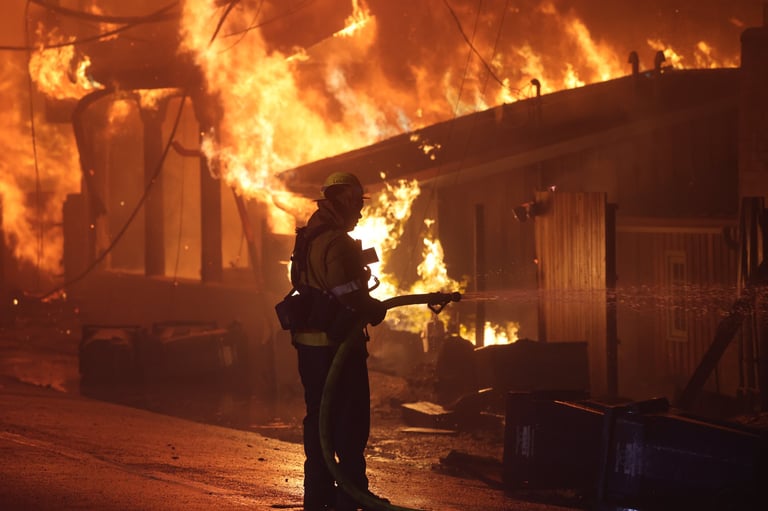


A study from the University of Colorado Boulder, published in Nature Communications, projects that wildfire could damage or destroy about 300,000 buildings across the contiguous United States by 2060—nearly triple the number threatened today—with estimates ranging from 133,200 to 449,100.
To reach that projection, researchers reconstructed fire risk to structures from 1945 to 2023 using records of burned areas, development and fire impacts, then combined those findings with weather, climate and housing-density data to model risk through 2060.
The study links growing losses to development in fire-prone areas, vulnerable buildings and communities, landscape changes and a longer fire season; development determines where risk is concentrated, while shifting fire activity drives how it grows.
The researchers used a business-as-usual scenario to illustrate the consequences of inaction, while acknowledging that some states are already taking steps to reduce wildfire risk.
The West, particularly California, is expected to remain the main center of structural losses, but risk is projected to increase most sharply in the central United States as fire activity grows in grasslands and prairies.
The area burned in the East could increase five-fold by 2060, underscoring how wildfire risk may spread into places many people consider safe for development.
The risks also fall unevenly: in the West, 30% of census tracts projected to face the highest fire risk experience socioeconomic hardship, potentially leaving residents with fewer resources for mitigation, insurance and recovery.
Max Moritz, a wildfire specialist not involved in the study, praised its combination of land-use and climate models but warned that they do not adequately account for wind, which has fueled destructive fires and could make some risks worse.
Some areas of California and Colorado require new homes to meet fire-safety codes based on local risk, but there is no federal or region-wide construction standard for the wildland-urban interface, and newer rules do not protect older homes.
Potential adaptations include fire-resilient building materials, protection from embers and defensible space around homes, alongside coordinated work by residents and local governments to reduce risks across communities and surrounding wildlands.
The researchers call for action on climate change, vegetation management, safer building practices and community preparedness, including fire codes and assessments of social vulnerability; climate mitigation alone will not address every driver of rising losses.
Summary based on 3 sources
Get a daily email with more US News stories
Sources
Gizmodo • Nov 3, 2026
Wildfire Risk to US Buildings Is On Track to Triple by 2060
Inside Climate News • Nov 3, 2026
US Buildings Lost to Wildfires Could Triple By 2060