How Newsrooms Will Track 2026 Midterm Results—and Explain When Races Are Called
October 31, 2026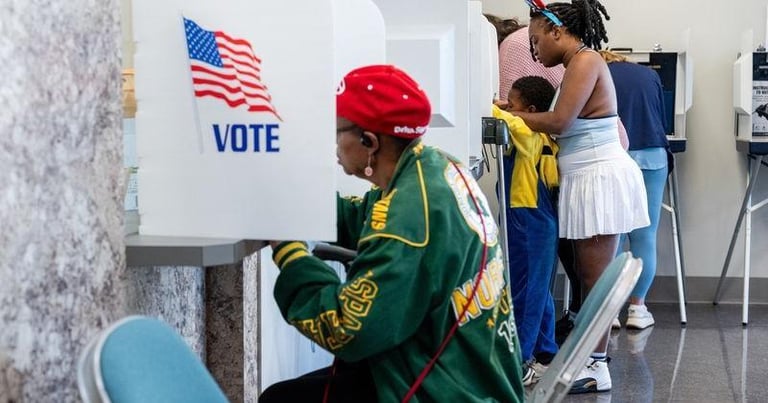

For the 2026 midterms, news organizations are expanding data-focused streams and digital tools to help audiences follow vote counts, understand projections and see how winners are declared amid heightened political interest and distrust of the media.
Most outlets will rely on calls from the Associated Press (AP) or Decision Desk HQ (DDHQ), and may project winners in close races before every ballot is counted; some will also apply their own analysis to shared data.
The AP, which has counted votes in every US election since 1848, plans to deploy more than 4,000 reporters to gather and verify results for its decision desk and client outlets, calling a race when its totals and estimates of outstanding ballots show the trailing candidate cannot catch up.
DDHQ gathers results from official election sources, supplemented by reporters, then estimates turnout and uncounted ballots using statistical models and expert review; a projection requires unanimous agreement from its team and approval from data-science head Scott Tranter.
Coverage plans vary: Fox News will make its own projections for statewide races and control of the House and Senate using AP counts and its analysis, while MS NOW will rely on AP calls and The New York Times generally uses AP calls but independently reviews competitive races using precinct data and its Needle model.
CNN’s Sightline will translate incoming results into a real-time assessment of which candidate is favored, based on analysis from CNN’s Decision Desk, but it is not a formal projection of a winner.
Sightline weighs five signals: outstanding votes and what a trailing candidate needs to catch up; the geography and partisan makeup of reported votes; comparisons with pre-election expectations and past results; the size and durability of a lead; and how reported voting methods compare with those still outstanding.
Those indicators enter the assessment at different stages: geography, lead size and voting method begin contributing after 10% of a state’s expected vote is reported, outstanding-vote analysis starts after 25%, and comparisons with past results draw on pre-election assessments before incorporating results as they arrive.
The signals also change in weight as the count develops—for example, vote-method analysis initially leans more on representation and past partisan patterns, then increasingly uses estimates informed by the accumulating vote.
Because the evidence can change or point in conflicting directions, Sightline’s assessment may shift as more results come in; digital users can inspect the underlying data before John King presents results on the network’s Magic Wall.
CBS News will pair Ed O’Keefe’s on-air analysis with “The Nerd Show,” a continuous numbers-focused stream hosted by elections and surveys director Anthony Salvanto and congressional correspondent Caitlin Huey-Burns; NewsNation will feature DDHQ analysts explaining incoming data and projection decisions.
NBC News plans 13 hours of coverage and will stream Steve Kornacki’s county- and precinct-level analysis continuously on YouTube and its streaming platform, alongside his television appearances.
Summary based on 4 sources
Get a daily email with more US News stories
Sources
Yahoo News • Nov 1, 2026
Explainer-How US news organizations will make midterm race calls
CNN • Nov 1, 2026
Here is how CNN’s Sightline real-time election insights tool works
Los Angeles Times • Oct 31, 2026
How to watch the data behind 2026 midterm election calls - Los Angeles Times
Central Oregon Daily • Nov 1, 2026
Explainer-How US news organizations will make midterm race calls