Tribal Leaders Use Legal Action to Enforce Treaty Rights Amid Climate and Resource Challenges
September 16, 2026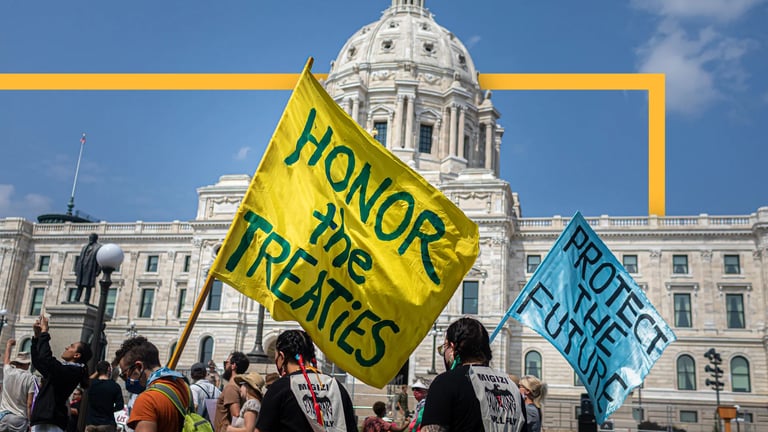

Tribal leaders and lawyers across the United States are increasingly using litigation to compel federal and state governments to honor treaties with about 374 nations, emphasizing sovereignty and treaty responsibilities.
Court outcomes have varied, with some decisions like the Arizona v. Navajo Nation case illustrating limits on affirmative federal duties to assess water needs, while still preserving other treaty-based rights.
The Seneca Nation objects to President Trump’s renaming of Lake Ontario to Lake America, invoking the Treaty of Canandaigua and noting the DOJ has not yet responded while the White House defends the action.
Climate change and resource development—especially in water rights in the Columbia River Basin and the Line 5 pipeline—are central themes in recent treaty-related lawsuits, as tribes seek environmental and cultural protections.
Experts describe a shift toward robust tribal legal advocacy, with scholars noting the Bureau of Indian Affairs' influence over which cases gain support and that Congress remains the gatekeeper of treaty changes.
Despite tensions, litigation has fostered longer-term collaboration and recognition between tribes and federal/state governments, even as renegotiation of treaties remains unlikely due to historical and legal constraints.
Tribes argue that treaties, though signed long ago, establish ongoing rights and protections affecting land use, water rights, sacred sites, and cultural practices.
Summary based on 1 source
Get a daily email with more US News stories
Source

Straight Arrow • Sep 16, 2026
The US doesn’t sign tribal treaties anymore, but the 374 intact are still winning court cases