Controversial Iran Deal Sparks Global Debate: Balance of Power and Economic Impact in Question
June 19, 2026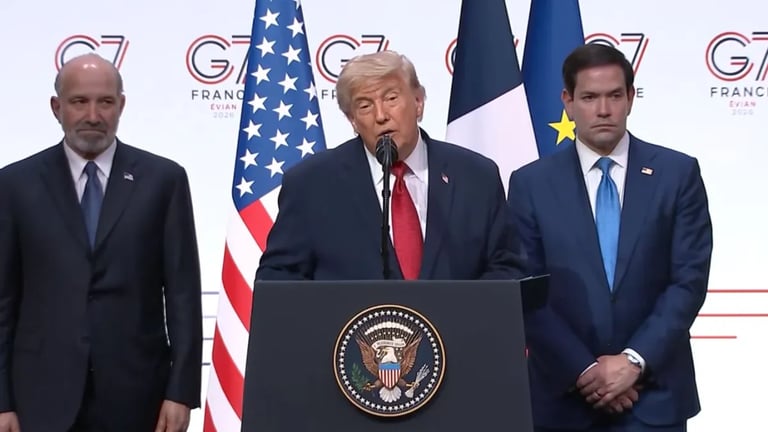

The deal split views: pro-deal experts praise a constructive framework and potential normalization, while critics warn it could be imbalanced and insufficient leverage against Iran, with more detailed negotiations expected over the next 60 days.
Experts differ on the agreement’s strength, noting that while some see it as a positive framework, others urge caution and emphasize the need for tighter terms in forthcoming talks.
Pakistan’s Prime Minister announced the agreement from Tehran in the early hours, and the U.S. president confirmed it soon after, with a goodwill gesture to Iran involving an immediate lift of the naval blockade of Iranian ports.
The deal’s diplomacy involved a broad cast of actors—Qatar, the United States, Iran, Pakistan, and Israel—highlighting the diffuse, multi-country effort to resolve deep-seated tensions.
Israel reacted with disappointment, perceiving potential U.S.–Iran alignment despite its own unilateral actions in Beirut on the same day.
Coming after four months of conflict and decades of confrontations, the accord carries broad implications for global economics, Middle East geopolitics, and U.S. domestic politics.
Observers noted the timing of public theatrics around Trump’s birthday dinner and a UFC event as potentially shaping his willingness to sign, reflecting the political theatre surrounding the negotiations.
Connecticut analysts and Iranian-Americans weighed in on the 14-point memorandum of understanding aimed at ending the conflict and reopening key trade routes.
A late-night breakthrough near Tehran, with Qatar mediating, helped resolve last-minute disagreements and bring the deal to announcement.
Negotiations revealed fragility and complexity, with friction over wording and sequencing of concessions underscoring the delicate diplomatic process.
Connecticut-based Iranian-Americans raised concerns about the deal given Iran’s current government, reflecting doubts about what the agreement would achieve domestically and how it might influence internal dynamics.
Key provisions include free passage through the Strait of Hormuz, ending the naval blockade, Iran’s reaffirmation that it will not pursue nuclear weapons, and a U.S. plan to provide up to $300 billion for Iran’s rebuild.
Summary based on 2 sources
Get a daily email with more US News stories
Sources
NBC Connecticut • Jun 19, 2026
Connecticut analysts, Iranian-Americans weigh U.S.-Iran deal aimed at ending conflict
Brisbane Times • Jun 19, 2026
How the US-Iran deal came down to the wire