Apple to Scan Public iCloud Links for Harmful Content, Even With Advanced Data Protection
November 4, 2026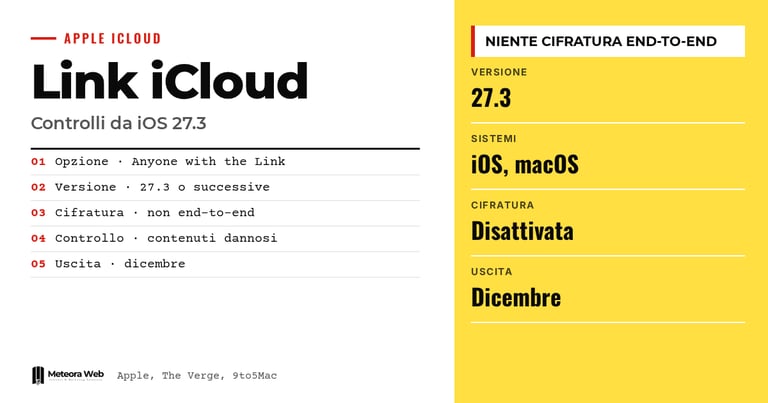

Apple says that starting with iOS, iPadOS, macOS and visionOS 27.3, it will check photos and files shared through iCloud’s “Anyone with the Link” option for harmful material—not everything stored in iCloud.
That setting lets anyone who obtains a link view the shared item, even if the link was first sent in a private conversation; content shared only with selected invitees through “People you choose” is excluded.
Apple has not defined “harmful content” or explained the change, but says it may move, refuse, alter or delete material, disable accounts and refer cases to law enforcement; affected users could also be barred from creating another account with the same email address or phone number.
There is a significant privacy trade-off: public-link content will not be end-to-end encrypted, even if Advanced Data Protection is enabled.
For personal files, users can choose “People you choose” to limit access to invited recipients, or send a copy when a shareable link is unnecessary; anyone who wants end-to-end encryption should avoid public links.
The policy marks a shift after years of criticism over child sexual abuse material in iCloud and a 2024 lawsuit concerning Apple’s decision to abandon a planned detection tool.
Apple announced an on-device system in 2021 to identify known child sexual abuse material by matching image hashes, but dropped the plan after policy and rights groups raised concerns, including the risk of errors.
Key questions remain unanswered, including whether checks will be automated or conducted by people, when they will happen, whether existing links will be checked, and how users can appeal mistaken flags or account bans.
The undefined scope of “harmful content” and the lack of detail about moderation methods have fueled concerns about overreach and inaccurate detection.
Checking material accessible to anyone with a link may be understandable, but Apple needs to explain what it scans, how it does so and what safeguards protect users from mistakes and penalties.
At the time of the article, iOS 27.3 was in its first beta, so the policy had not yet reached stable iPhones; users can review existing public links and switch personal content to invite-only sharing.
The policy also applies in the UAE, Saudi Arabia and Egypt as part of the same software release, though Apple says availability may vary by region; the practical impact will become clearer as the updates reach general release.
Summary based on 25 sources
Get a daily email with more Tech stories
Sources

The Verge • Nov 4, 2026
Apple will check shared iCloud links for ‘harmful content’
PCMag Middle East • Nov 6, 2026
iOS 27.3 Lets Apple Start Checking Shared iCloud Links for Harmful Content
TechRepublic • Nov 5, 2026
Apple to Check Public iCloud Links Starting With iOS 27.3 - TechRepublic
The Hacker News • Nov 5, 2026
Apple to Start Scanning Publicly Shared iCloud Photos and Files for Harmful Content