India Emerges as Crucial Hub for Global Direct-to-Mobile Broadcast Revolution
September 14, 2026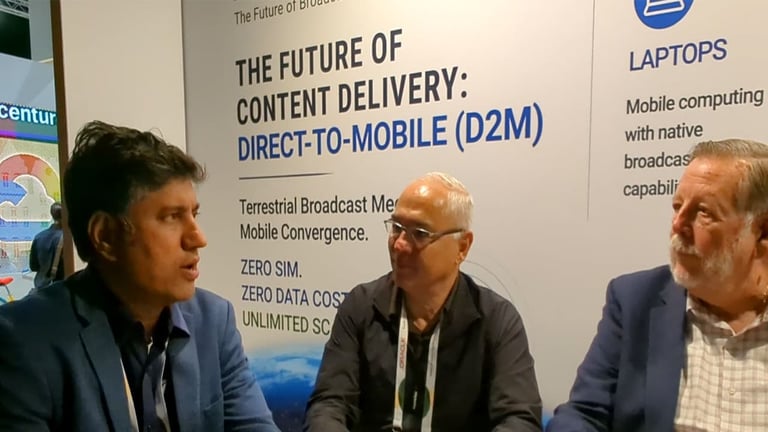

India is identified as a pivotal market for a global Direct-to-Mobile (D2M) ecosystem, with insights from US and Brazil tech leaders emphasizing India’s scale, semiconductor ambitions, and manufacturing strengths as essential to making broadcast-to-mobile services commercially viable and enabling free content access on mobile devices.
Beyond traditional TV, D2M could extend to tablets, notebooks, and feature phones, reshaping how consumers access broadcast content without relying on conventional data networks.
D2M has the potential to deliver free-to-air content without mobile data or SIM cards, appealing to diverse device categories and possibly creating a new distribution channel for broadcasters, especially in India where affordability and access are critical.
Brazil’s Globo CTO describes DTV+ evolution based on ATSC 3.0 as a model for D2M, noting early planning since 2020 and ongoing deployments to show its potential for both fixed and mobile reception.
The path forward calls for moving from demonstrations to a coordinated ecosystem that includes broadcasters, device makers, chipset companies, telcos, and policymakers to scale D2M in India and beyond.
Terrestrial broadcasting is highlighted as a strategic asset for technological sovereignty, offering an independent distribution infrastructure separate from commercial mobile networks.
India’s semiconductor and electronics-manufacturing policies could act as a catalyst by providing policy certainty for device makers and component manufacturers to invest in D2M-compatible products.
Mark Aitken of ONE Media/Sinclair argues that India’s vast 1.4-billion-person market could be the catalyst and certainty markets need to commit to D2M, potentially reshaping the economics of the device ecosystem.
Summary based on 1 source
Get a daily email with more Tech stories
Source

Asianet Newsable • Sep 14, 2026
India Key to Global D2M Ecosystem, Say US & Brazil Tech Leaders