Arm Unveils AI-Driven Mobile GPU for PC-Like Gaming on Smartphones
September 8, 2026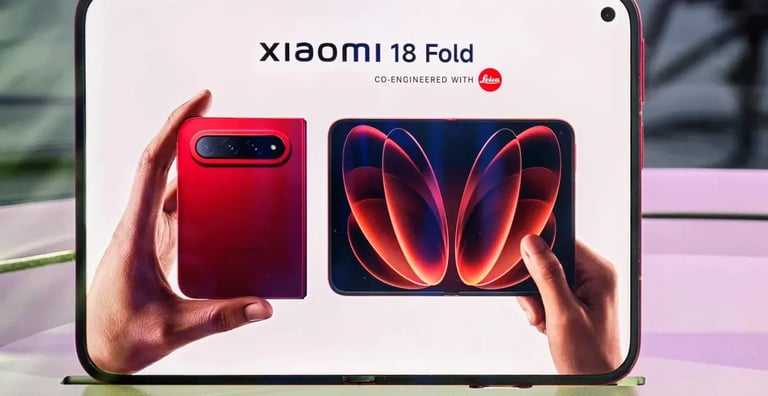

Arm is unveiling Mobile CSS 2, a platform focused on AI-native features to boost the GPU for future Android smartphones.
Alongside, Arm introduces the Mali G2-Ultra NX, the first Mali GPU with integrated dedicated neural accelerators inside shader cores for AI-native mobile graphics as part of Mobile CSS for Mobile 2.
This GPU accelerator is designed to bring PC-like gaming tech to mobile, with AI-powered graphics features already showing in Xiaomi devices.
Official demonstrations claim up to four times the framerate when neural upscaling, frame rate upscaling, and denoising are combined, though real-world speedups may be tempered by frame-generation latency.
The third-generation ray tracing unit handles more complex lighting, shadows, and reflections, while reducing DRAM traffic and boosting efficiency with Opacity Micromaps to raise frame rates and cut ray-tracing workload.
AI-enhanced rendering enables lower-resolution, lower-frame renders to achieve acceptable visuals, potentially enabling smaller, cheaper devices without sacrificing performance.
Confirmed launch titles using the accelerator include Where Winds Meet, Infinity Nikki, and Arena Breakout: Infinite, with more games expected to be announced.
C2-ultra cores completed an AI-driven workflow 24% faster than last year, signaling stronger efficiency in tasks like speech processing, memory retrieval, reasoning, and web browsing.
Arm demonstrated a co-developed game with Sumo Digital showing up to fourfold efficiency gains and substantial memory traffic reductions, plus notable gains in benchmark and ray tracing performance.
Battery and thermal performance are central to the promise, with a target around 2.5 watts total draw (1.5 watts for the GPU) to sustain longer gaming sessions.
Architectural changes yield up to 24% higher benchmark performance and 14% higher gaming performance, with mobile sessions reaching up to 120 FPS in internal tests comparing to the prior generation.
The processor enables neural graphics like upscaling, frame generation, and ray reconstruction to boost performance and efficiency without increasing overall power use.
Summary based on 3 sources
Get a daily email with more Tech stories
Sources


The Verge • Sep 8, 2026
First Xiaomi, then the world: why Arm might give phone gaming a huge graphics boost
Unite.AI • Sep 8, 2026
Arm Unveils Mali G2-Ultra NX, Its First AI-Native Mobile GPU