Formula E's AI Revolution: Pioneering Energy Efficiency and Performance in Electric Vehicles
June 6, 2026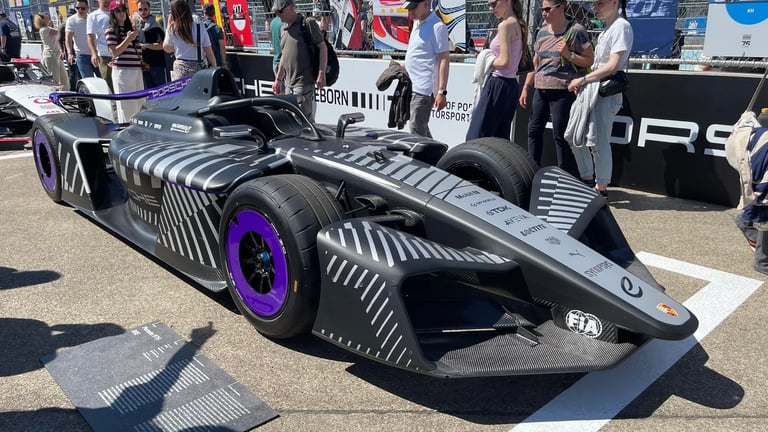

AI-driven insights and predictive capabilities in Formula E are enabling forecasting of energy usage, optimizing management, and coaching drivers, with potential to extend to production EVs that anticipate weather, traffic, and charging needs to maximize range and performance.
Formula E serves as a living laboratory for energy intelligence, where on-track lessons about data management and software-driven optimization can transfer to road cars, reshaping energy efficiency in consumer EVs.
Digital twins and simulation, such as Jaguar TCS Racing’s Virtual Vehicle Validation Model (V3M), allow rapid iteration by modeling vehicle behavior and refining software and battery systems within tight development cycles tied to racing seasons.
Industry leaders, including Formula E’s CTO, team and FIA technical directors, converge on a view that software and AI will define the future of electric mobility.
ABB’s long-standing partnership provides charging infrastructure and electrification technology, including components like the BrightLoop DC-to-DC converter, enabling real-world testing and data collection to inform commercial products.
Powertrain efficiencies in Formula E have reached about 91.5%, reducing hardware differentiation and elevating software as the primary performance differentiator for teams and manufacturers.
The race-to-road technology transfer is shifting from hardware to software and AI, with AI, predictive analytics, and digital twins driving the core performance gains for the GEN4 era starting in 2026.
AI can act as an intelligent assistant in future EVs, processing wide-ranging sensor data and external conditions to guide drivers and strategies rather than merely reacting to events.
Summary based on 1 source
Get a daily email with more Tech stories
Source
Forbes • Jun 6, 2026
How Formula E's AI Revolution Is Teaching Road Cars To Manage Energy