Roman Telescope to Revolutionize Exoplanet Discovery and Cosmic Understanding with September Launch
June 2, 2026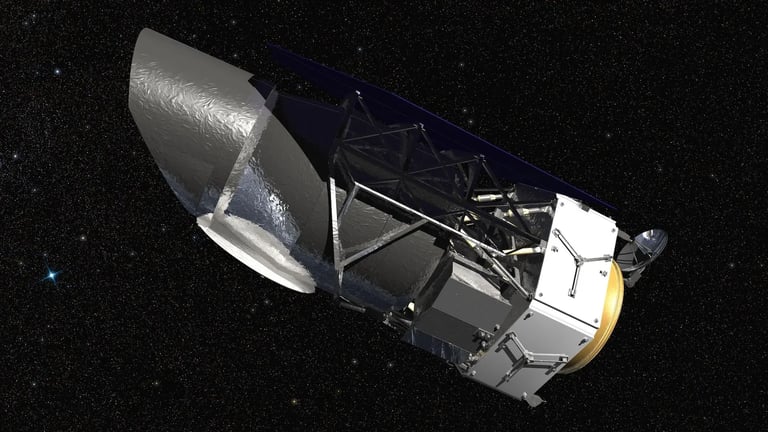

Roman is envisioned as a successor to Kepler, providing foundational data that could transform understanding of exoplanets, dark energy, and the structure of the cosmos.
The project evolved from the Wide Field Infrared Survey Telescope (WFIRST); it was nearly canceled during budget battles in 2019–2020 but was preserved and renamed Roman, with JWST continuing independently.
As a powerful survey instrument, Roman will survey around 100 million stars in the Galactic bulge, complementing Gaia’s visible-light observations by detecting infrared light to peer through dense regions of the galaxy.
Named after NASA’s first chief astronomer and “Mother of Hubble,” Roman features a 2.4-meter mirror with a field of view about 100 times larger than Hubble’s, enabling sweeping panoramic views of the universe.
The Roman Space Telescope, NASA’s next flagship observatory, is moving from Goddard Space Flight Center to Kennedy Space Center for final launch preparations ahead of a planned September lift-off aboard a SpaceX Falcon Heavy rocket.
Roman will be launched from Launch Complex 39A and transported aboard NASA’s Pegasus barge for the journey to the launch site.
Roman will employ both transit observations and gravitational microlensing to detect exoplanets, including many small worlds in wide orbits and regions of the Milky Way previously unexplored.
The mission aims to investigate dark energy, study cosmic evolution, and search for exoplanets, with the potential to discover around 100,000 new worlds, vastly increasing the known exoplanet population.
Summary based on 1 source
Get a daily email with more Tech stories
Source
Forbes • Jun 2, 2026
NASA’s $4 Billion Roman Space Telescope Heads To Florida For Launch