Study Warns of Increased Risk of S-Class Solar Superflares Threatening Satellites and Power Grids During Cycle 25
May 24, 2026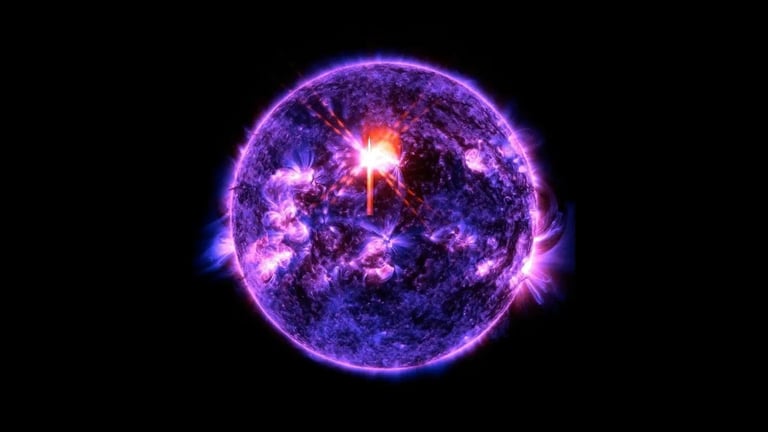

A long-term study analyzing almost five decades of solar activity indicates an elevated risk of extreme S-class superflares, which could disrupt satellites, power grids, and communications while posing dangers to astronauts.
Machine learning identifies two predicted windows where S-class flare likelihood is higher during Solar Cycle 25: roughly mid-2025 to mid-2026, and early to mid-2027, with the first window dominated by activity in the Sun’s southern hemisphere and the second shifting north.
May 2024 featured a G5 geomagnetic storm and major eruptions on the Sun’s far side, underscoring that powerful flares can occur even when Earth-facing activity isn’t evident.
Historical context shows the Sun has moved past its 2024 solar maximum, with cycle 25 recording 37 observed S-class superflares across multiple cycles since the late 1970s, though no Earth-directed S-class flare has been confirmed in this cycle.
Published in the Journal of Geophysical Research: Space Physics, the study advocates a probabilistic forecasting approach for S-class flares, using time windows and solar regions rather than pinpointing exact moments.
Hidden far-side eruptions highlight the challenge of prediction and the need for improved forecasting to protect Earth, satellites, and crewed missions.
Researchers link two recurring solar rhythms—about 1.7 years and seven years—associated with magneto-Rossby waves; when both cycles align positively, the probability of an S-class flare rises markedly.
Potential impacts of superflares include satellite damage, GPS and radio disruptions, and large-scale electrical outages, influencing future planning for human spaceflight and missions like Artemis.
Summary based on 1 source
Get a daily email with more Tech stories
Source
Forbes • May 24, 2026
Scientists Warn The Sun Could Be About To Produce A ‘Superflare’