Pulsar Fusion Ignites World's First Fusion Rocket, Aims for Mars in Under Six Months
March 26, 2026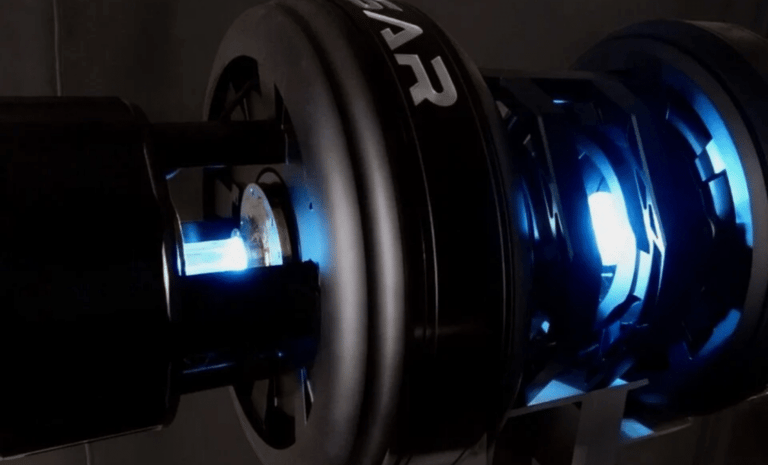

Pulsar Fusion, a UK-based startup, ignited the world’s first fusion rocket using its Sunbird exhaust system, marking a milestone in nuclear fusion propulsion.
The company also announced it achieved first plasma in its Sunbird exhaust test system, a key milestone for its fusion propulsion concept.
DDFD combines high exhaust velocity with significant onboard power, leveraging nuclear fusion to surpass traditional chemical propulsion in efficiency and thrust.
The demonstration took place on March 22, 2026, at Pulsar Fusion’s UK facility and was streamed live during Amazon’s MARS Conference in California, showcasing plasma ignition and confinement.
The core technology demonstrated at the MARS Conference validates the Dual Direct Fusion Drive (DDFD), which Pulsar Fusion says could deliver a specific impulse of 10,000 to 15,000 seconds and about 2 megawatts of power for continuous thrust and onboard systems.
Sunbird aims to reach Mars in under six months, reducing current chemical propulsion times by more than 40%, and is designed to enable faster, more fuel-efficient interplanetary travel with greater cargo capacity.
Sunbird uses the Dual Direct Fusion Drive (DDFD) to provide propulsion and electricity, with a high specific impulse and the potential to significantly shorten travel times to Mars.
In its operational plan, Sunbird is intended to transport about 1,000 to 2,000 kilograms of cargo to Mars orbit in under six months once fully functional.
While a full, operational vehicle and stationary orbital infrastructure remain long-term goals, the recent plasma confinement achievement marks a major step toward rapid deep-space travel via fusion propulsion.
The achievement is framed as a foundational milestone rather than an immediate commercial system, acknowledging challenges ahead before widespread implementation.
Operational demonstrations are planned for in-orbit testing of Sunbird’s core components in 2027, with broader aspirations to launch the world’s first nuclear fusion rocket.
A 2027 orbital demonstration of Sunbird’s core components is planned to validate operation in vacuum, a step toward more complex orbital docking and propulsion testing.
Summary based on 2 sources
Get a daily email with more Tech stories
Sources
Gizmodo • Mar 26, 2026
Startup Successfully Ignites World’s First Fusion Rocket
The Daily Galaxy - Great Discoveries Channel • Mar 27, 2026
Startup Reaches Landmark Milestone by Igniting World’s First Fusion Rocket for Faster Space Travel