Autonomous Charging Revolutionizes Urban EV Infrastructure by 2030s, Reducing Home Charging Dependence
March 25, 2026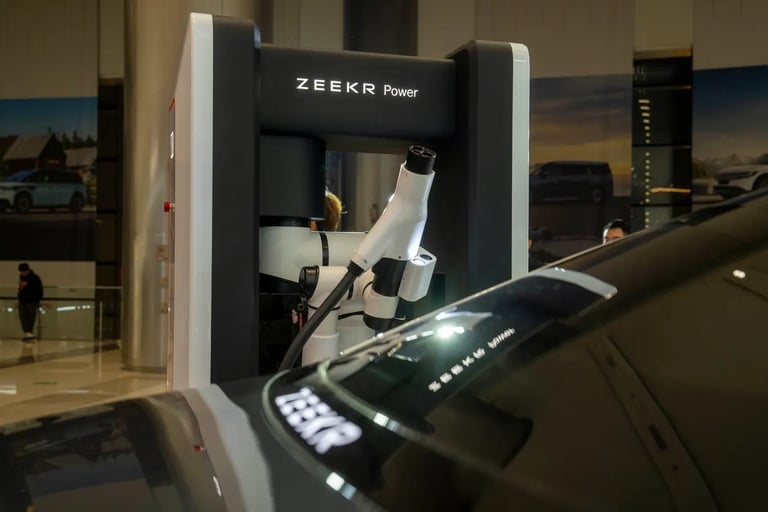

By the 2030s, autonomous charging becomes a standard feature in many EVs, reducing reliance on home charging for city drivers as LIDAR-enabled robotics and simple rail-based systems enable broad robotic charging in parking lots and along streets.
The business model centers on parking lots and commercial sites housing rows of automated stalls, where cars top up during daytime solar surplus and off-peak hours using smart charging to avoid expensive grid upgrades.
Wireless inductive charging is deemed less viable than robotics due to high current costs, while battery swapping has seen limited success outside China; standardized plug-in robotics are viewed as the scalable path.
Vehicle-to-Grid could become a future capability if cars support bidirectional charging with minimal battery degradation, and practical rollout is likely easier via cars driving to V2G ports rather than home installations.
Robocars, or fully autonomous taxis, would gain from automated charging stations that coordinate charging during waits or reposition to maximize utilization and minimize downtime.
Intercity travel will feature faster chargers (roughly 150–300 kW) at robotic banks near dining and service clusters, with very high-power 500 kW+ options reserved for those who can’t time charging with meals, while pricing discourages idle time and promotes full utilization.
Automated charging hardware may use front or rear mounted sockets with rail-mounted robotic arms or simplified plug-in robots, reducing labor costs and boosting stall utilization.
The vision is a world of automated, self-plugging charging stations and robotic charging, creating a 'magic car' that stays charged near automated hubs with little user input and no home charging.
Urban and intercity planning anticipates fewer home Level 2 installs, more office and municipal banks of automated stalls, and solar-powered charging integrated into building design, with older car models gradually exiting by 2040.
Tesla and other major makers—including Rivian, Xpeng, and BYD—are expected to push self-driving features capable of low-speed navigation and parking, enabling autonomous charging workflows and boosting overall EV feasibility.
Summary based on 1 source
Get a daily email with more Tech stories
Source
Forbes • Mar 25, 2026
The Core Rules Of EV Charging Infrastructure Are About To Change