NASA Unveils Ambitious Plan for Permanent Moon Base by 2035, Eyeing Mars Missions
March 24, 2026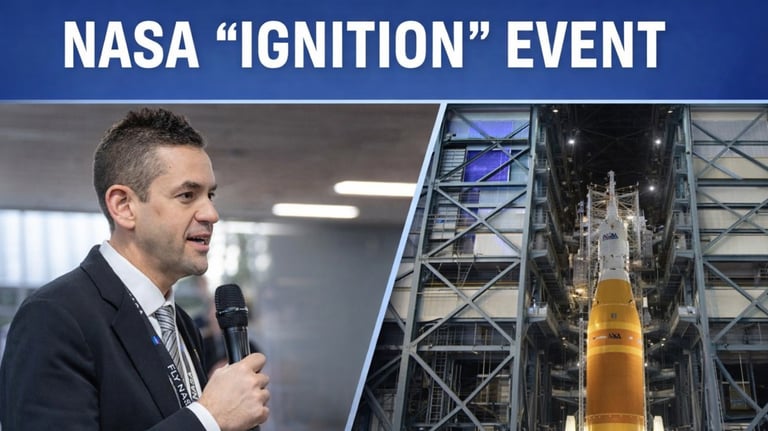


NASA plans a permanent Moon base to support sustained human presence, aiming for a functional lunar hub by 2035 to enable science, exploration, and eventual Mars missions.
Artemis Base Camp and related missions form the core of NASA’s sustainable lunar presence, featuring habitats, laboratories, power, rovers, and life-support designed for months-long stays.
The Artemis program begins with uncrewed tests and progresses toward crewed missions, targeting a permanent lunar base near the south pole as a platform for future deep-space exploration.
Editor’s note: this is breaking news and may be updated as developments unfold.
NASA emphasizes international and commercial partnerships, including Europe for infrastructure, cargo delivery, modular construction, and operations.
Nuclear propulsion is a key goal, though not yet proven in missions; specific propulsion designs and industry collaborations have not been disclosed.
The project is valued around $20 billion and is planned over roughly seven years, framed within a competitive space race context with China.
The centerpiece Space Reactor-1 Freedom spacecraft will establish flight heritage for nuclear power systems and set precedents for future missions.
Strategic context includes other nations’ lunar ambitions and the broader aim of international leadership in space exploration.
The plan favors direct surface operations with phased development over an orbital gateway, though a future orbital outpost isn’t ruled out.
NASA Administrator emphasizes rapid action and a phased, pragmatic approach rather than prolonged planning.
Helicopters, modeled on Ingenuity, will support aerial exploration and site analysis.
Summary based on 9 sources
Get a daily email with more Tech stories
Sources

Colombia One • Mar 24, 2026
NASA Plans Permanent Moon Base to Expand Human Presence Beyond Earth

Scientific American • Mar 24, 2026
NASA announces nuclear-powered Mars mission by 2028