Microsoft Unveils Project Silica: Revolutionary Glass Data Storage Promises Millennia of Preservation
February 18, 2026


Microsoft researchers showcase Project Silica’s glass-based data storage, encoding vast information in borosilicate glass by using femtosecond lasers to write nanoscale structures, aiming for millennial-scale data libraries.
The system offers an end-to-end laser-based solution to inscribe and retrieve data in glass, delivering durable, high-capacity archival storage suitable for large-scale data centers.
Through parallel writing and novel voxel methods, the approach achieves high data density and energy efficiency, with both birefringent and phase-voxel techniques described for different media and hardware requirements.
The excerpt provided does not include verifiable test results, dates, locations, or figures to summarize.
The published Nature paper provides the evidence for reliable writing, reading, and decoding processes, emphasizing archival rather than consumer storage applications.
Reading involves examining each layer with a microscope and machine-learning-assisted decoding to translate optical signals back into binary data, while writing consumes significant energy yet is optimized for scale.
Two writing methods are highlighted: pseudo-single-pulse writing for birefringent voxels at high throughput and single-pulse writing for phase voxels, both operating around 10 MHz to maximize efficiency.
Future directions include scaling through higher laser repetition rates, greater numerical aperture, and exploring different glass compositions to optimize archival performance.
Industry-scale potential envisions this as an end-to-end solution for data centers, national libraries, and cultural repositories, capable of preserving humanity’s digital heritage for centuries.
Deployment is framed as suitable for cloud and data-center use rather than consumer storage due to the required upfront investment and infrastructure.
Industry voices and researchers highlight the technology’s durability and scalability, noting potential collaboration and broader interest beyond Microsoft.
Accelerated aging tests and Arrhenius analysis indicate remarkable long-term stability, with data remaining readable after extended periods under room-temperature conditions.
Summary based on 11 sources
Get a daily email with more Tech stories
Sources

The Guardian • Feb 18, 2026
Stone, parchment or laser-written glass? Scientists find new way to preserve data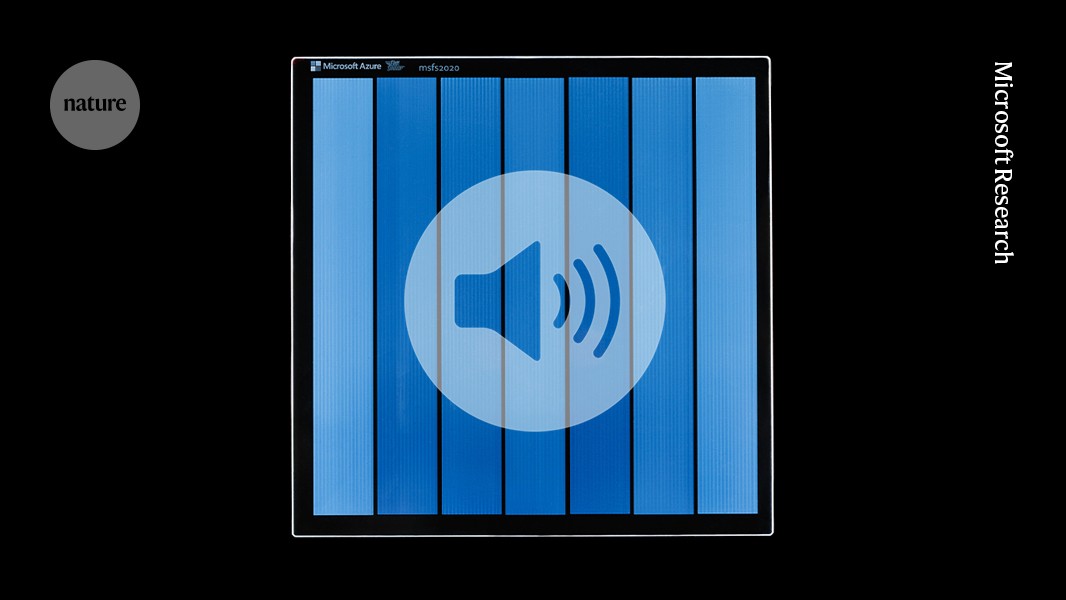
Nature • Feb 18, 2026
This chunk of glass could store two million books for 10,000 years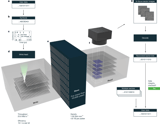
Nature • Feb 18, 2026
Laser writing in glass for dense, fast and efficient archival data storage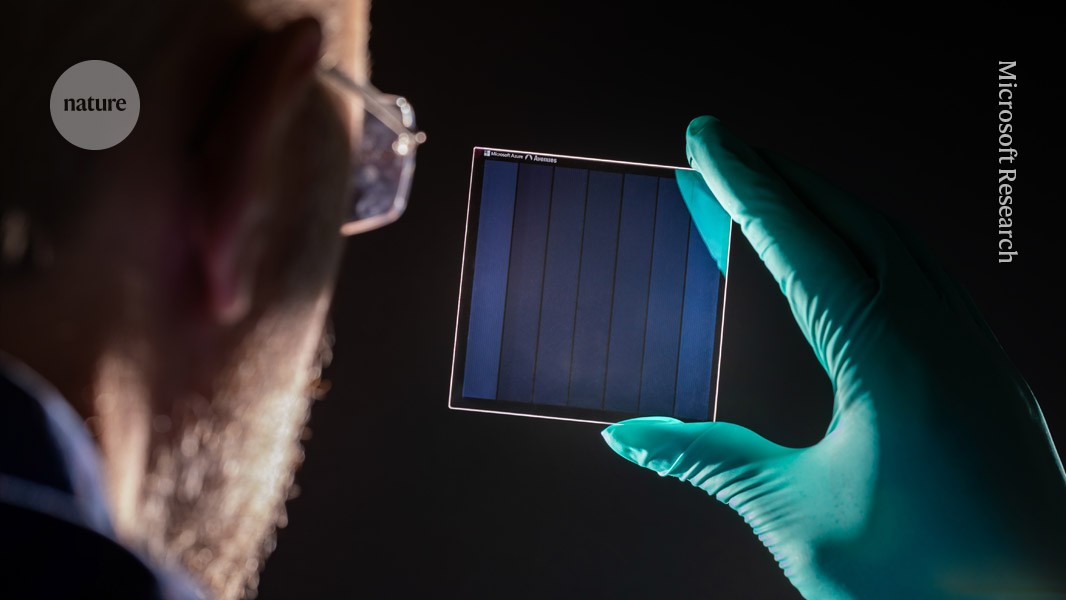
Nature • Feb 18, 2026
Microsoft team creates 'revolutionary' data storage system that lasts for millennia