Researchers Uncover Adjustable Bacteriophage Vault—With AI Help and Human Oversight
November 4, 2026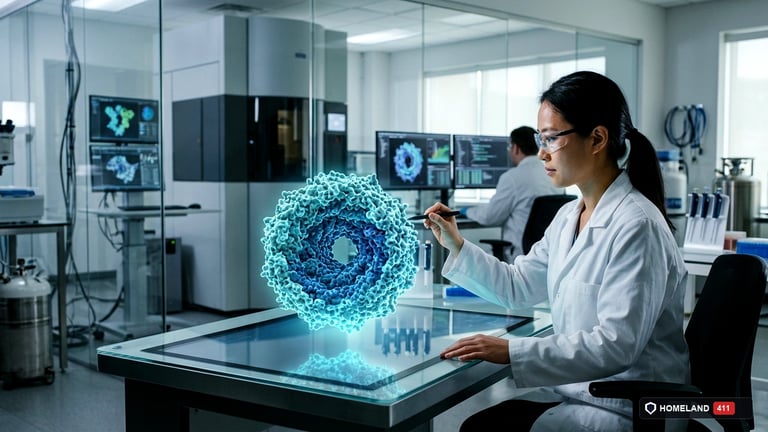


Anthropic’s biology research team identified vault-like particles among proteins associated with bacteria and bacteriophages, then determined the first 3D structure of a vault built from the bacteriophage protein L05.
The finding extends research on vault particles, first discovered in 1986 and previously studied mainly in eukaryotes; the study has not been peer reviewed and does not show that the particle forms in its natural host or during infection.
To find the particle, researchers screened 44 candidate proteins and combined computational analysis with experiments in E. coli and cryo-electron microscopy, which confirmed vault shapes for four candidates.
The L05 vault is made of 96 identical subunits with 48-fold rotational symmetry, compared with 78 subunits in classical mammalian vaults; it has seven structural repeats per protein chain and an estimated mass of 9.5 megadaltons.
Although the prokaryotic vault is shorter and has a flatter end cap than its mammalian counterpart, it encloses about 25% more volume.
The team found that the cap closes in three tiers, where neighboring copies of the same protein adopt different shapes; changing contacts near the cap could prevent closure, leaving open or aggregated particles.
Adding two repeating segments to L05 increased its repeat count from seven to nine and produced closed vaults with about 20% more enclosed volume, showing that the shell’s size can be adjusted without preventing assembly.
An unidentified small molecule appears in a pocket in each L05 protein copy; its shape may resemble coenzyme A, but its identity and function remain unconfirmed.
Claude assisted researchers across literature searches, DNA design, purification planning and structural analysis, including running an open-source RELION workflow under human direction; Anthropic said some work that can take weeks or months was completed in days.
With an optimized chromatography-based purification method, the team cut the time from cells to a microscopy grid from about three days to roughly 90 minutes and produced its first complete structural model in 34 hours.
The project took less than four months, but Claude also made consequential errors: a suggested growth-medium additive interfered with DNA delivery and delayed work by two weeks, while an omitted cryo-EM processing step produced a flawed map; researchers caught and corrected both.
The researchers stressed that human oversight remained essential because Claude’s mistakes had to be identified and fixed.
Summary based on 7 sources
Get a daily email with more AI stories
Sources
Anthropic • Nov 4, 2026
Investigating vault particles with Claude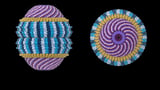
Unite.AI • Nov 4, 2026
Anthropic Uses Claude to Show Bacterial and Phage Proteins Form Vaults
Blockchain.News • Nov 4, 2026
Anthropic Reveals First 3D Structure of Prokaryotic Vault Particles
Crypto Briefing • Nov 4, 2026
Anthropic maps first 3D structure of a prokaryotic vault particle using Claude