Voyager 1 Nears Historic One Light-Day Distance From Earth
November 2, 2026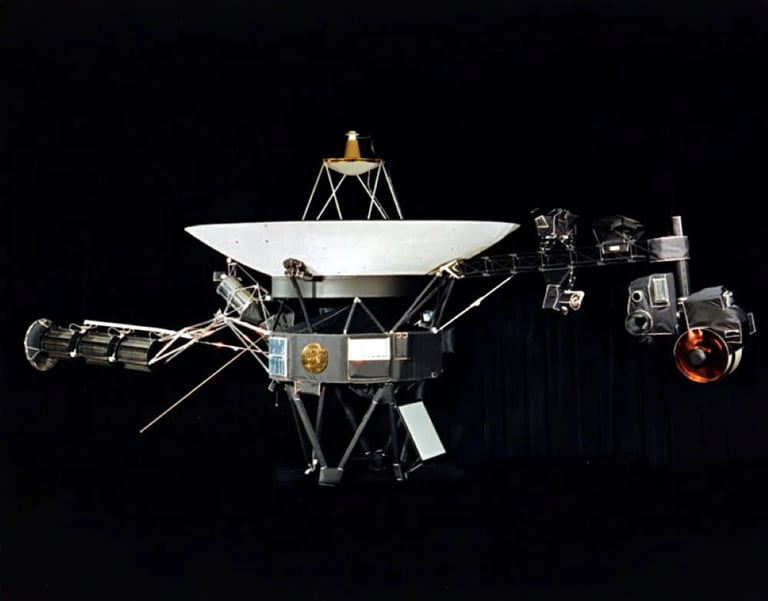


NASA has already deactivated two of Voyager 1’s scientific instruments as its available power declines.
NASA’s Voyager 1, launched in 1977, is expected to reach 16.09 billion miles (25.89 billion kilometers) from Earth on Nov. 18, 2026—the first human-made object to be a full light-day away.
At that distance, a signal will take a day to travel each way, meaning commands and replies will face a 48-hour round trip.
Voyager 1 continues through interstellar space at about 38,000 mph, powered by electricity from heat released by decaying plutonium; its generator loses about four watts of capacity each year.
The spacecraft briefly lost contact with NASA during scheduled communication attempts on Oct. 18 and 19, but communication resumed on Oct. 20 and has continued since; engineers have not identified the cause.
During the disruption, one set of thrusters stopped working, and Voyager 1’s fault-protection system automatically activated backup thrusters to keep it in a stable, safe configuration.
To preserve power for the mission, NASA completed a “Big Bang” upgrade in early September that replaced three devices with lower-energy alternatives; the change may delay shutting down another science instrument, which otherwise might have been switched off as early as summer 2027.
Voyager 1 and Voyager 2 are the only spacecraft to have directly studied the environment beyond the Sun’s heliosphere, making Voyager 1’s remaining instruments especially valuable.
Voyager 1 continues gathering data about interstellar space, and reaching one light-day will mark its distance from Earth—not a change in the environment around the spacecraft.
Summary based on 3 sources
Get a daily email with more Tech stories
Sources

ScienceDaily • Nov 3, 2026
NASA’s Voyager 1 is about to reach a historic one-light-day milestone
Aviation Week Network • Nov 2, 2026
NASA’s Voyager 1 Nears Record-Setting Distance Milestone