UN Reports Warn Warming Overshoot Could Inflict Irreversible Damage on Earth’s Frozen Regions
November 2, 2026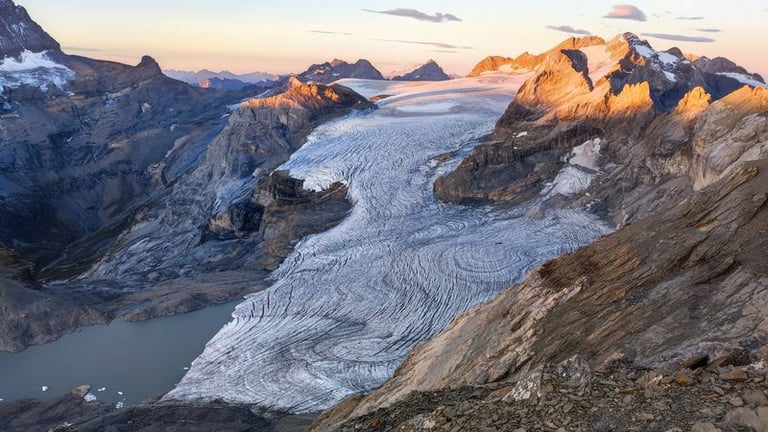

Greenland and Antarctic ice sheets are melting about six times faster than in the 1990s, while Switzerland has lost nearly 20% of its glacier ice since 2020.
Two UN reports warn that temporarily exceeding 1.5°C of global warming could cause large-scale, often irreversible damage to Earth’s frozen regions, with effects lasting centuries.
One report, “Overshoot and the Cryosphere: Averting Global Meltdown,” was published on 2 November by the International Cryosphere Climate Initiative in collaboration with the UN Environment Programme, drawing on work by more than 80 polar and mountain scientists.
The cryosphere—ice sheets, glaciers, sea ice and permafrost—helps regulate temperature, weather and ocean conditions, so its decline threatens coastal communities and water supplies.
James Kirkham, the report’s coordinating lead author and ICCI chief scientist, said any warming overshoot should be as brief and limited as possible, because every added fraction of a degree and year above 1.5°C raises the risks.
Kirkham said ice-loss impacts are already affecting people worldwide and urged global leaders to treat this year’s visible damage as a wake-up call ahead of COP31 in Antalya.
Glacier loss can eventually reduce water available for drinking, farming, irrigation and hydropower, while thawing permafrost releases greenhouse gases and destabilizes mountain ground, increasing the risk of landslides, avalanches and collapses.
Rising seas threaten hundreds of millions of people in coming decades, and glacier loss increases water scarcity and hazards; Kirkham cited deadly flooding in Nepal in August 2026 that caused damage estimated at 10% of the country’s GDP.
Because glacier-lake floods and ice-rock avalanches can cross borders, Kirkham called for countries to share data and coordinate monitoring, alongside efforts to cut emissions, slow ice loss and build resilience.
The report also recommends expanding hazard monitoring and early-warning systems in partnership with local communities, so residents can identify changes, understand risks and respond effectively.
Under current policies, which the article says would produce about 2.8°C of warming, nearly all near-surface permafrost could thaw, ocean circulation could be severely disrupted and polar oceans could become more acidic.
The authors say returning to 1.5°C or below by 2100 remains possible if countries accelerate the transition away from fossil fuels and reach net-zero emissions by mid-century, but decisions in the next few years will shape the scale of damage.
Summary based on 5 sources
Get a daily email with more Science stories
Sources
Yahoo News • Nov 2, 2026
UN reports warn of large-scale damage to Earth's ice from climate change
The Guardian • Nov 2, 2026
Cryosphere faces permanent damage when world overshoots 1.5C, scientists warn
The New Indian Express • Nov 2, 2026
Ice loss impacts this year a wake-up call for world leaders ahead of COP31: ICCI chief scientist
theprint • Nov 3, 2026
Earth’s frozen regions face centuries of damage if warming crosses 1.5°C