Wall Sits Three Times Weekly Significantly Lower Blood Pressure, Study Finds
October 27, 2026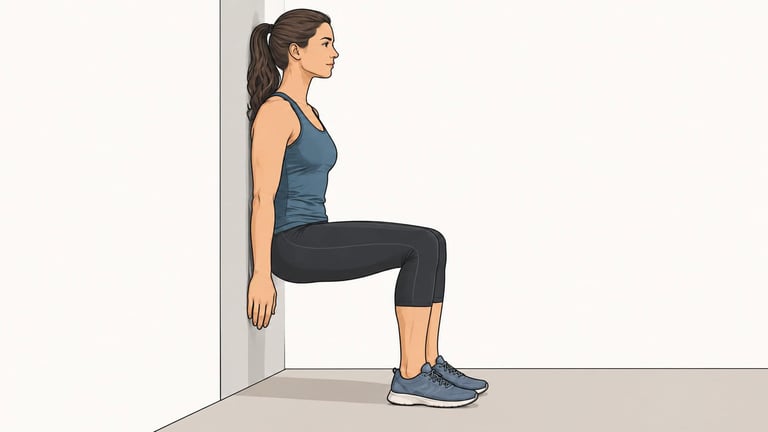

A new BMJ Open Sport & Exercise Medicine study finds that isometric exercise performed once or twice weekly can maintain some blood pressure benefits gained from regular activity over eight weeks, with greater and more sustained improvements when done three times weekly.
The practical guidance for wall sits recommends standing against a sturdy wall with feet shoulder-width apart, sliding into a seated position with thighs parallel if possible, maintaining controlled breathing, and performing four two-minute holds separated by two minutes of rest, with a gradual buildup.
In an eight-week trial at Canterbury Christ Church University, 100 adults with normal to high-normal blood pressure were randomized into exercise and control groups; all exercise groups began with three wall-squat sessions per week for four weeks, adjusting intensity to reach target heart rates.
Participants averaged 37.4 years old, with systolic blood pressure between 120 and 140 mmHg, and included five groups (one control and four isometric training schedules) who were not regularly exercising and had no hypertension diagnosis.
Stopping exercise after the first four weeks reversed benefits, with blood pressure returning to control levels by week eight, indicating ongoing activity is needed to maintain gains.
Isometric exercises used included wall squats, planks, and handgrip holds, with wall squats serving as the primary lower-body exercise in this study.
Wall sits, as an isometric exercise, can significantly reduce resting blood pressure—averaging reductions around 8.2 mmHg systolic and 4 mmHg diastolic according to a 2023 analysis.
Overall, the study offers a pragmatic option for people with limited time or adherence challenges, but emphasizes that continued training is needed to maximize and sustain benefits.
One weekly wall-sit may serve as a practical fallback when schedules are tight, but the optimal benefits come from three sessions per week.
The training protocol consisted of four weekly wall-squat holds (two minutes seated recovery between holds) for four weeks, followed by maintenance schedules of three, two, one weekly session(s), or none for the subsequent four weeks.
By week eight, three sessions per week produced the largest improvement in systolic pressure (from 131.2 to 117.5 mmHg, about a 13.7 mmHg drop), with two and one weekly sessions yielding smaller but significant reductions, while all exercise groups remained below control levels.
At eight weeks, only the three-times-per-week group showed the greatest and most persistent reductions in systolic blood pressure, while diastolic improvements were not statistically significant in the lower-frequency groups.
Summary based on 2 sources
Get a daily email with more Science stories
Sources

ScienceDaily • Oct 26, 2026
The surprisingly simple exercise that could lower your blood pressure
ZME Science • Oct 27, 2026
This Simple Wall Exercise Can Lower Blood Pressure. But How Often Do You Need to Do It?