Lumina Simulation Unveils Early Universe's Secrets, Boosts Predictions for JWST and Future Telescopes
October 26, 2026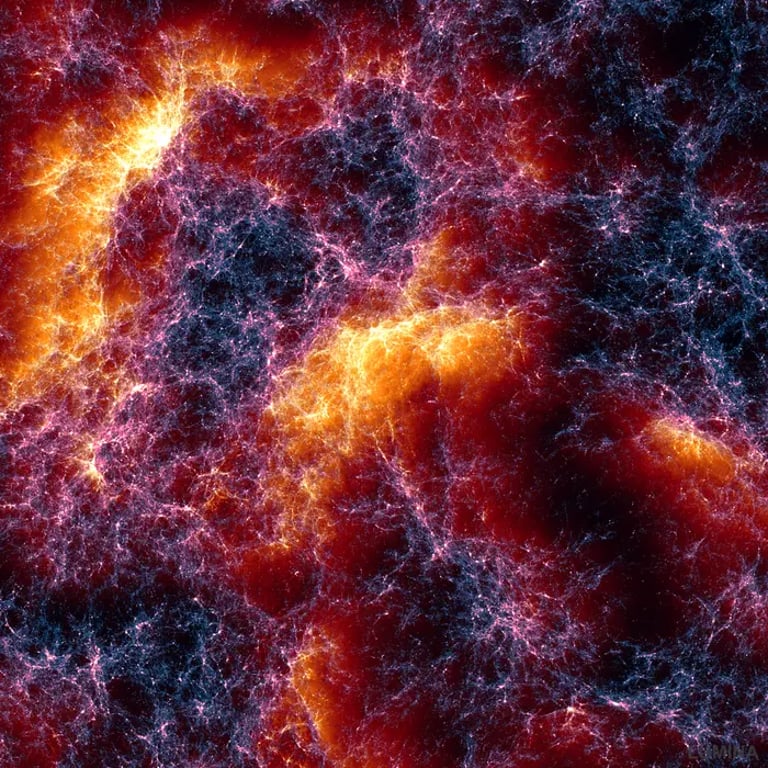


Lumina is a large-scale cosmological radiation-hydrodynamics simulation that models the interaction of ordinary matter, dark matter, and radiation during the universe’s first two billion years to illuminate how early galaxies formed and transformed surrounding gas.
The simulation spans more than 1.5 billion light-years on each side and over 100 times the volume of previous efforts, uniquely capturing helium reionisation as it occurred.
A key feature is the simultaneous modeling of hydrogen and helium reionization, enabling a self-consistent study of their evolution and impact on the growing universe.
collaborators include Oliver Zier of the Harvard & Smithsonian Center for Astrophysics and Aaron Smith of UT Dallas, both highlighting JWST’s role in guiding frontier research and turning theory into testable predictions.
An Innovation News Network article provides additional context on the Roman Space Telescope’s launch and mission objectives.
The research is supported by NASA and the National Science Foundation, and it used resources from the Oak Ridge Leadership Computing Facility.
Led by ITC Fellow Oliver Zier and colleagues, the study was published in Monthly Notices of the Royal Astronomical Society and marks a notable advance in topology and resolution for cosmological radiation-hydrodynamics modeling.
Lumina aims to provide detailed predictions that can be compared with observations from JWST, the Nancy Grace Roman Space Telescope, and other telescopes to test and refine cosmological theories.
Its predictions are designed for comparison with JWST, the Roman Space Telescope, and other observatories to test our understanding of the universe’s laws.
The work showcases how modern supercomputers can generate detailed models that are directly juxtaposed with observational data to validate or revise theories about the early universe.
Lead author Oliver Zier emphasizes that translating theoretical models into detailed, testable predictions through Lumina helps reveal how the early universe’s conditions produced observable structures today.
Lumina builds on and extends prior efforts like Thesan in volume and detail, calibrated with observations from JWST and other observatories.
Summary based on 5 sources
Get a daily email with more Tech stories
Sources
MIT Physics • Oct 26, 2026
Watch the universe emerge from the dark ages, with Lumina
Popular Science • Oct 26, 2026
6 stellar images of the early universe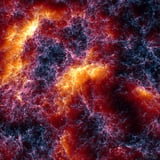
Innovation News Network • Oct 26, 2026
Smithsonian creates early universe simulation