Himalayas Melting Faster: Urgent Call for Cross-Border Action to Prevent Regional Disaster
September 13, 2026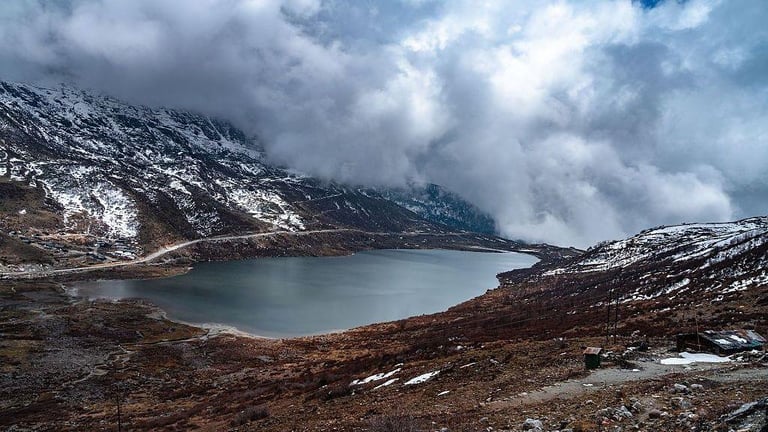

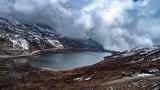
The Himalayas are melting rapidly, with glaciers losing mass up to 65% faster than a decade ago, and glacial lakes are increasing in number and instability, elevating cascading hazard risks across the region.
There is a significant monitoring gap, as only about 21 of roughly 40,000 Himalayan glaciers are tracked in detail, hindering risk assessment and response planning.
India bears a disproportionate share of risk and impact, with the region contributing roughly 35% of disasters while occupying about 18% of Indian land, and a 2025 assessment identifying 56 glacial lakes in India as very high risk.
Priority actions call for reducing black-carbon emissions, expanding glacier monitoring, strengthening disaster early-warning systems, and reforming tourism to prioritize local resilience and value retention.
The report outlines 10 priority transitions, including cutting black-carbon emissions, expanding glacier monitoring, improving early warning systems, and reforming tourism to benefit local communities rather than maximizing visitor numbers.
Experts emphasize that risks cross national borders and require cross-border monitoring, shared risk information, joint resilience investment, and coordinated disaster response to protect millions of people and regional economies.
The Himalayas function as a transboundary system where hazards do not respect borders, necessitating cross-border monitoring, shared risk data, and coordinated resilience investments.
The Himalayas are approaching a tipping point with substantial socio-economic consequences for India and the region, demanding coordinated policy action, improved monitoring, and climate mitigation efforts.
Economist Lord Nicholas Stern warns the Himalayas are a tipping point for a vast, interconnected system vital to hundreds of millions, underscoring the need for swift policy and resilience measures.
Black-carbon emissions—from sources like brick kilns—drive about a third of Himalayan glacier melt and are actionable by India and neighbors to slow glacier loss.
Addressing black carbon from brick kilns and other sources could cut roughly one-third of melt, offering a direct policy lever for reduction.
The Himalayas sustain around 20% of India's GDP through water-dependent sectors, yet mountain states capture only about 5% of that value, highlighting vulnerability and a need for resilience-focused investment.
Summary based on 2 sources
Get a daily email with more Science stories
Sources
BBC News • Sep 13, 2026
Nepal floods: The Himalayas are melting faster - and India's economy is 'at risk'