Semaglutide Extends Lifespan and Boosts Health in Aging Mice, Shows Potential Beyond Calorie Restriction
September 2, 2026

In late life, semaglutide extended lifespan and improved physiological function in female mice, marking a notable anti-aging signal.
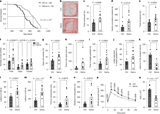
Daily semaglutide treatment in 20‑month‑old female C57BL/6 mice reduced food intake by about a quarter and raised median lifespan from 742 to 834 days.
Beyond longevity, the drug enhanced memory, maintained weight despite appetite suppression, and improved metabolic health, at times outperforming calorie restriction in certain measures.
The report cites additional literature and notes no competing interests among the authors.
These effects imply a mechanism extending lifespan that goes beyond calorie restriction alone.
Context is drawn from related GLP-1 aging studies and human research links, underscoring broader implications for aging biology and potential human translation.
Gene activity analyses show overlap between calorie restriction and GLP-1 treatment, including reduced inflammation and fat processing and upregulation of genes tied to glucose handling and protein maintenance, suggesting semaglutide mimics CR with extra cognitive and metabolic benefits.
Inflammation and cellular aging markers declined: lower inflammatory cytokines, fewer pro-inflammatory cells, reduced cellular senescence signals, and improved mitochondrial function with favorable gene upregulation.
Experts call the study rigorous and promising for aging, yet emphasize results are preliminary and human longevity benefits remain unproven.
Researchers acknowledge uncertainty about the relative contributions of dieting versus semaglutide to lifespan extension and aim to disentangle these effects.
Overall, GLP-1 receptor activation late in life appears to mimic many calorie-restriction benefits, extends lifespan, broadens aging-related phenotypes, and engages conserved nutrient-sensing pathways, with human effects needing long-term clinical evaluation.
The study measured age-related cellular changes and found reduced aging signals with GLP-1 treatment.
Summary based on 4 sources
Get a daily email with more Science stories
Sources
Nature • Sep 2, 2026
Late-life semaglutide treatment slows ageing and extends lifespan in female mice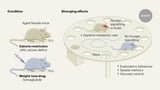
Nature • Sep 2, 2026
Weight-loss drug slows ageing in female mice
Nature • Sep 2, 2026
Can GLP-1 drugs slow ageing? Mouse study shows promise
Scientific American • Sep 2, 2026
GLP-1 weight-loss medication could slow aging and extend lifespan