New Mathematical Insight Unveils Ambiguity in Biodiversity Models, Challenges Evolutionary Interpretations
September 2, 2026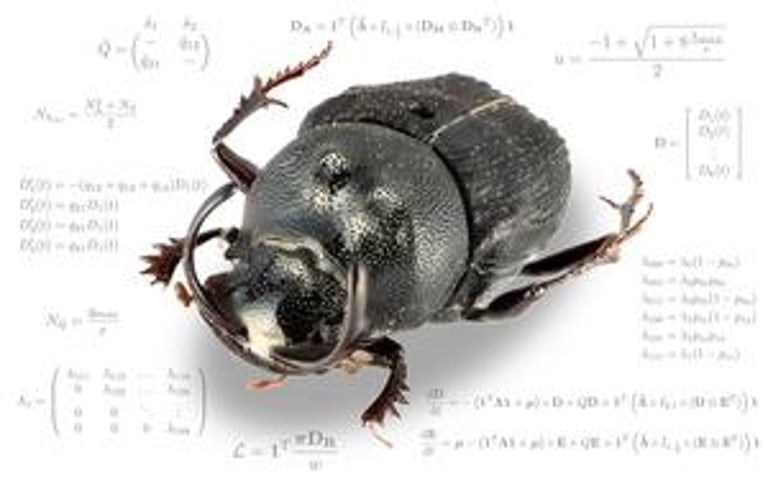

A new mathematical property reveals a deep ambiguity in widely used biodiversity models: different models can fit the same data and lead to potentially incorrect biological interpretations of how traits affect diversification.
The original article by Tarasov and Uyeda, published in Nature Communications in 2026, provides contact information for the researchers.
The approach employs the concept of lumpability to determine when states can be safely grouped without changing the system’s behavior.
Researchers describe a Hidden Expansion decomposition that rewrites any discrete-state Markov model as an equivalent hidden-state model, exposing hidden symmetries.
Tarasov and Uyeda show that many discrete-state Markov models can be transformed into hidden-state forms, making different evolutionary histories appear indistinguishable in data.
The framework clarifies where misleading results can arise and outlines the limits of current methods, rather than claiming a complete solution.
It does not eliminate ambiguity but delineates what can and cannot be concluded about trait-dependent diversification using existing methods.
The ambiguity is an intrinsic property of the models studied, representing progress toward understanding rather than a single error to fix.
This work marks a cross-disciplinary advance, linking Markov-model mathematics with evolutionary biology to reshape how researchers assess model-based conclusions.
The findings were published in Nature Communications on July 25, 2026, under the title Unidentifiability and false-positive inference in state-dependent diversification models.
A stick-insect case study shows how the same data can imply no effect or an effect of male weapon evolution on diversification, depending on the model, illustrating model-driven ambiguity.
Ultimately, the research highlights a bidirectional loop: biology inspires new mathematical representations, which in turn refine biological interpretation.
Summary based on 2 sources
Get a daily email with more Science stories
Sources

University of Helsinki • Sep 2, 2026
When biology inspires mathematics: new discovery explains why a widely used evolutionary method can give false answers