Scientists Warn of Unprecedented Wildfire Intensity Threatening Western Forests' Survival
August 31, 2026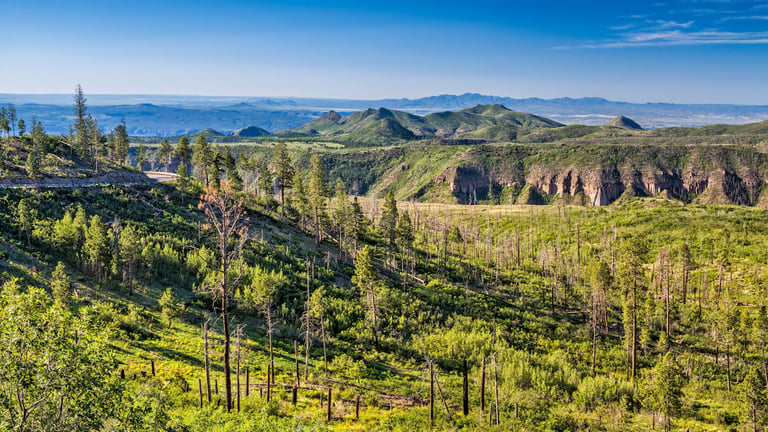

Historically, Western fires before the 1880s were often low-intensity 'good fires' that maintained ecosystems; the move to suppression and climate-driven high-severity fires has fundamentally changed fire dynamics with wide implications for wildlife and communities.
The process of 'type conversion' transforms forests into grass- and shrub-dominated landscapes that ignite more quickly, store biomass underground, and resprout after fires, perpetuating fire cycles.
Models and field observations project warming climates pushing forests toward non-forested states, with by-2065 projections showing fewer than half of Jemez-like conifer forests remaining and by 2115 only five to 33 percent may endure.
Over the ensuing decades, larger fires such as Cerro Grande and Las Conchas burned across previous burn scars, and three decades later many forests have still not recovered.
Recent research indicates a regional shift to high-severity, wildfire-dominated regimes with unprecedented forest die-off; roughly nine percent of West forests have died in the last four decades.
Fire behavior has evolved into 'firestorms' and pyrocumulonimbus events that generate their own weather and spread embers rapidly, complicating suppression efforts.
Scientists warn that climate warming, drought, and a century of fire suppression have left behind accumulated fuels, leading to more frequent, hotter fires capable of destroying forests rather than simply burning them back to health.
The 1996 Dome Fire in the Jemez Mountains burned 6,664 acres and killed large swaths of conifers, signaling a shift toward more intense wildfires in the American West.
Key voices, including researchers Park Williams, Andreas Wion, Ellis Margolis, and Jennifer Balch, describe the current trajectory as unsustainable and transformative for regional ecosystems.
Summary based on 1 source
Get a daily email with more Science stories
Source
Environment • Aug 31, 2026
How Wildfire is Erasing the Forests of the American West