Intensive Chicken Farming Fuels Campylobacter Spread, Raising Health Concerns
July 28, 2026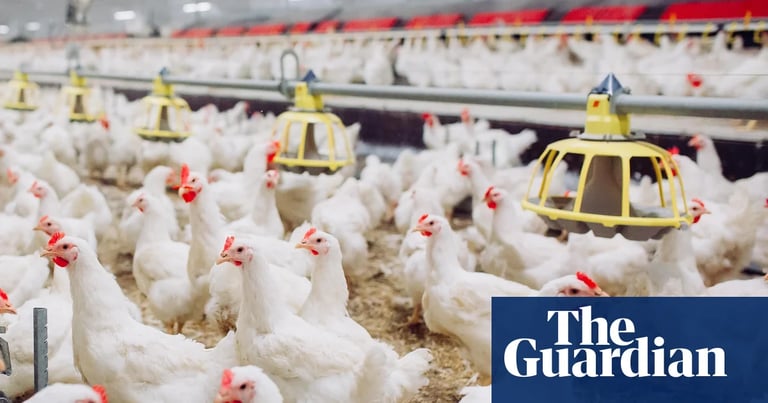

Industrial chicken farming is accelerating the spread and genetic mingling of Campylobacter between chickens and wild birds, creating conditions for new strains to emerge.
Cooking kills Campylobacter, but contamination on hands, surfaces, or produce with even small exposures keeps everyday transmission risks present.
Campylobacter is the world’s leading bacterial cause of diarrhoea, with a large share of UK gastroenteritis tied to raw chicken, underscoring its public health prominence.
The study, published in the Proceedings of the National Academy of Sciences, highlights that the scale of poultry production is a major driver of pathogen evolution.
Advocacy groups like Communities Against Factory Farming criticize policy directions and push against expanding intensive poultry facilities, citing health and environmental costs.
Rising antimicrobial resistance within circulating Campylobacter strains heightens concerns about treatment options for human infections.
Global chicken populations have expanded seven-fold since the 1960s, reaching about 27 billion birds and making up roughly 70% of all bird biomass, propelled by intensive farming.
Genetic changes linked to adaptation to the chicken environment, including antimicrobial resistance genes, accompany modern poultry production practices that rely on antibiotics.
Analysis of nearly 2,800 Campylobacter genomes from 30 countries (1979–2024) shows a 100-fold rise in transmission events between chickens and wild birds since 1900, with recent years amplifying this exchange.
Summary based on 1 source
Get a daily email with more Science stories
Source

The Guardian • Jul 28, 2026
Industrial chicken farming accelerating spread of diarrhoea bacteria, study finds