New Study Reveals Purine Metabolite 'Glue' as Key to Drug Efficacy and Metabolic Control
July 15, 2026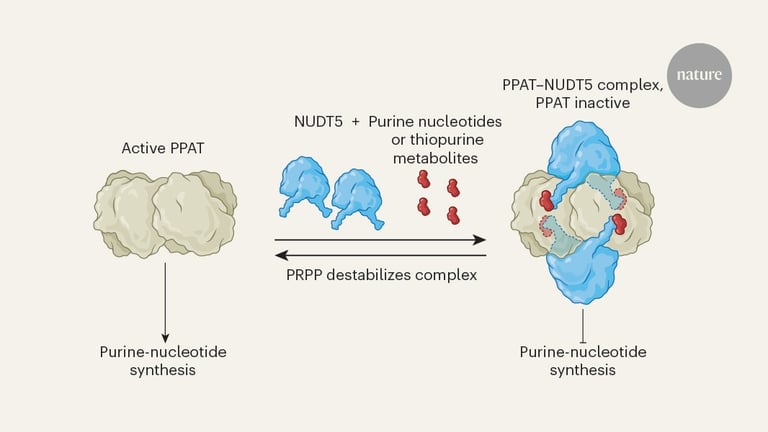

Metabolite glues regulate de novo purine biosynthesis by stabilizing a PPAT–NUDT5 complex, linking purine levels to feedback control of nucleotide production.
In cellular contexts, methotrexate raises PRPP and lowers AMP, promoting dissociation of the PPAT–NUDT5 complex; hypoxanthine supplementation can restore complex stability, illustrating metabolic control of the glue mechanism.
NUDT5 anchors to PPAT through a molecular glue involving AMP, curbing PPAT activity under certain metabolic conditions.
The findings are placed in pharmacology and drug discovery, with implications for chemotherapeutic response and potential therapies based on metabolite glues.
Molecular glues work by bringing two proteins into proximity to trigger outcomes such as degradation, modification, or activation.
Thiopurines, longstanding clinical drugs, also function as molecular glues, linking nutrient sensing to proximity-driven regulation in cells.
The study points to a broader potential for designing enhanced molecular glues by exploiting a flexible glue pocket, as shown with 6-TIMP and thiopurine metabolites, suggesting rational therapeutic targeting of purine metabolism.
The work from Witus and colleagues builds on the broader context of metabolite-mediated protein interactions and therapeutic strategies.
Cellular metabolites can regulate biology by stabilizing transient protein interactions, adding a new dimension to metabolism and signaling.
Mutations disrupting glue recognition (NUDT5 L217A/K218A or NUDT5(3A)) reduce thiopurine sensitivity, highlighting the glue mechanism’s role in drug efficacy.
Recent Nature findings show naturally occurring purine nucleotides can act as molecular glues, linking metabolism to protein interactions.
Crystal structures reveal PPAT–NUDT5–AMP and PPAT–NUDT5–6-meTIMP complexes, identifying key interfaces and residues (NUDT5 Y74, L217, K218; PPAT pocket residues) governing glue formation and activity.
Summary based on 2 sources
Get a daily email with more Science stories
Sources
Nature • Jul 15, 2026
Metabolite glues as a means of purine sensing and chemotherapeutic response
Nature • Jul 15, 2026
Nucleotides act as ‘molecular glue’ and can sense their own abundance