High-Fat Diet Fuels Tumor Growth in Mice, Study Finds; Ketones Not the Culprit
July 15, 2026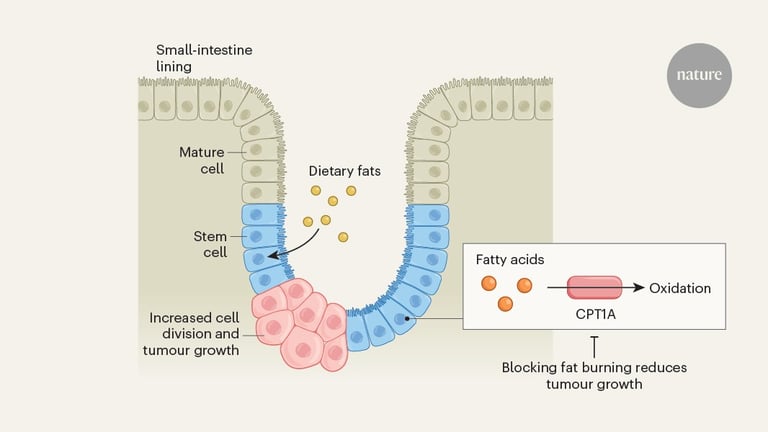

A broad set of references contextualizes how diet interacts with tumor metabolism, covering high-fat diets, intestinal stem cell biology, and ketone body signaling.
The references highlight mechanisms such as fatty acid oxidation, MTOR signaling in the niche, ketone body signaling, and the effects of fasting and refeeding on intestinal biology, placing the ketogenic diet within a metabolic signaling framework.
Key background themes describe how dietary fats, fatty acid oxidation, and caloric restriction intersect with intestinal stem cells, Paneth cell niche, and tumor initiation, drawing on studies from Nature, Cell, Cancer Letters, and other top journals.
The study provides supplementary data and resources, including scRNA-seq and lipidomics datasets, accessible via Broad Institute Single Cell Portal (SCP3661), GEO (GSE334093), and Metabolomics Workbench (PR003051).
Overall, the piece reads as a research article with data availability and an extensive bibliography, suitable for distillation into core findings, methods, data resources, and contextual background.
There are potential implications for humans, suggesting dietary recommendations for cancer risk may need personalization, considering individual susceptibility and tumor type rather than universal ketogenic guidance.
The broader context reexamines prior assumptions about ketones versus fats in cancer metabolism and cautions against translating mouse-model findings into clinical dietary advice for people with varying cancer risks.
The study by Shay et al. in Nature (2026) examines ketogenic diets, lipid metabolism, and intestinal tumorigenesis in susceptible mice.
A key finding is that increased tumor growth is driven by high dietary fat rather than ketone bodies, showing cancer cells can use fat to fuel tumor progression in this model.
The research investigates how a ketogenic diet affects intestinal tumorigenesis, suggesting lipids—not ketones—mediate effects on intestinal stem cells and tumor development.
A Nature News & Views piece reports that a ketogenic diet can promote intestinal tumor formation in predisposed mice, challenging the idea that ketosis or reduced glucose universally suppresses cancer growth.
Summary based on 2 sources
Get a daily email with more Science stories
Sources
Nature • Jul 15, 2026
Ketogenic diet mediates intestinal tumorigenesis through lipids not ketones
Nature • Jul 15, 2026
A high-fat, low-carbohydrate diet can feed intestinal tumours