Rare 450-Million-Year-Old Crinoid Fossil Unveils Ancient Marine Life Secrets
July 7, 2026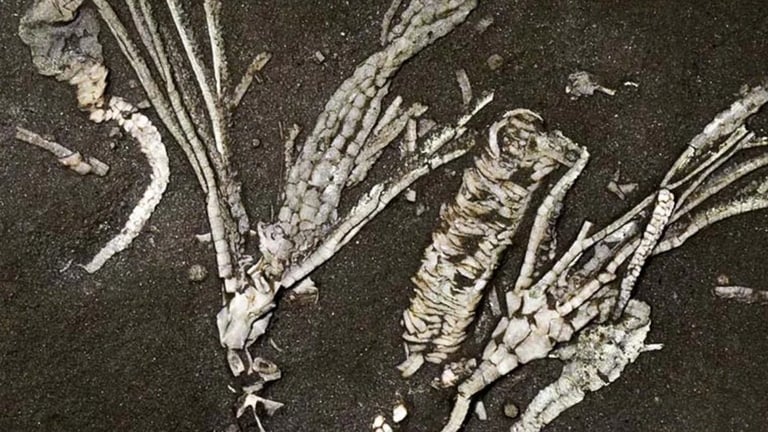

The study suggests the crinoid lived under unusual conditions—rapid burial in fine mud with anoxic water—that enabled soft tissues to fossilize, indicating ancient crinoids may have fed and behaved differently from their modern relatives.
The fossil was found in a small Montreal museum collection and dates back to the Paleozoic era, offering new insights into ancient marine ecosystems.
Published in Royal Society Open Science, the findings allow comparisons between extinct and modern crinoids to illuminate evolutionary patterns shaping today’s biosphere.
A rare 450-million-year-old crinoid fossil from Dendrocrinus simcoensis preserves soft tissues, marking the second known instance of soft-tissue preservation in crinoids.
Researchers used skeletal features and comparisons to related fossils and living crinoids to confirm the specimen as a crinoid and to interpret the preserved tube feet, informing its feeding and navigation lifestyle.
Soft-tissue preservation is exceedingly uncommon because soft parts typically decay, making this find especially valuable for understanding ancient crinoid biology and behavior.
Summary based on 1 source
Get a daily email with more Science stories
Source
Gizmodo • Jul 7, 2026
Scientists Find Super-Rare Soft Tissue Fossil From 450-Million-Year-Old Sea Creature