CERN Upgrades LHC for Tenfold Particle Collision Boost, Paving Way for New Physics Discoveries by 2030
June 30, 2026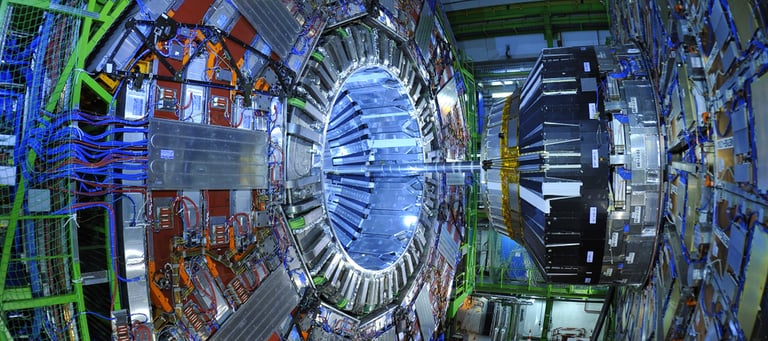

The HiLumi LHC will boost the collider’s luminosity by up to tenfold, enabling precision Higgs studies and expanding the potential to uncover new physics beyond the Standard Model.
During the upgrade, the LHC will smash together roughly 10 times more particles than in its original design, increasing data collection and collision rate.
Researchers expect the HL-LHC to record data on as many as 380 million Higgs bosons, opening new avenues to probe phenomena beyond the Standard Model and potential clues about dark matter and the matter–antimatter imbalance.
Upgrades are extensive, including the removal and replacement of about 1.2 kilometers of accelerator components and major detector renovations to measure collision outputs more effectively.
LS3 will modernize and expand CERN’s accelerator complex, spanning the entire chain, improving the injector system, and renovating experimental facilities, including consolidation of the Super Proton Synchrotron North Area and upgrades at ISOLDE and related facilities.
Even during shutdown, research continues as thousands of scientists analyze existing data while engineers upgrade the accelerator and detectors, with a gradual restart anticipated in 2028 and full operation by 2030.
The ATLAS and CMS detectors will be upgraded to handle between 140 and 200 proton–proton collisions per bunch crossing, up from about 60 in the previous run.
CERN has begun a four-year shutdown of the LHC to prepare for the HiLumi LHC, with operations resuming around 2030.
The machine will be upgraded to the High-Luminosity Large Hadron Collider and is scheduled to come back online in 2030.
About 1.2 kilometers of the 27-kilometer LHC ring will be upgraded with 11–12 T superconducting magnets and superconducting crab cavities to boost collision rates at the detectors.
ATLAS and CMS will receive comprehensive upgrades—new trigger systems, next-generation all-silicon tracking with billions of channels, ultra-fast timing detectors, and upgraded calorimeters—to manage higher data rates.
The overarching aim of these upgrades is to enable new discoveries in fundamental physics and to illuminate questions about dark matter, antimatter, and the early universe.
Summary based on 4 sources
Get a daily email with more Science stories
Sources

Physics World • Jun 30, 2026
CERN says Large Hadron Collider has ‘exceeded every expectation’ as it shuts down ahead of major upgrade
Live Science • Jun 30, 2026
CERN shuts down Large Hadron Collider until 2030, upgrading the atom smasher to its most powerful form yet
Science News • Jun 30, 2026
CERN shutters the Large Hadron Collider for a major transformation
Innovation News Network • Jun 30, 2026
Large Hadron Collider enters Long Shutdown 3 to prepare for next era of particle physics