NASA's $30 Million Swift Rescue: Pegasus's Final Flight to Save Aged Observatory from Reentry
June 26, 2026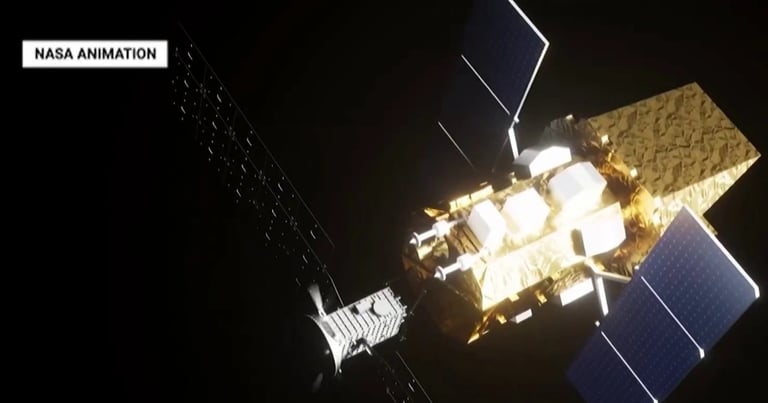

NASA is funding a $30 million rescue mission, Swift Boost, to save the aging Neil Gehrels Swift Observatory by raising its orbit to extend its science life beyond the point where atmospheric drag would deorbit it.
The story sits amid broader space news, including interstellar visitor hypotheses, government UFO program reporting, and lunar base plans, signaling a busy period for spaceflight and exploration coverage.
The mission will launch a Link spacecraft on a Pegasus XL rocket from Kwajalein Atoll, using Northrop Grumman’s Stargazer air-launch system in what would be the Pegasus’s final flight, with a tight, high-urgency development timeline.
If the effort fails, Swift will continue its descent and reenter the atmosphere as planned, ending the mission and its telescope operations.
Swift has previously contributed to discoveries about heavy elements in gamma-ray bursts, including identifying the exceptionally bright BOAT gamma-ray burst in 2022.
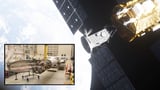
The rescue is led by Katalyst Space with its Link spacecraft, a refrigerator-sized, unproven vehicle equipped with ion engines, robotic arms, and sensors designed to grapple and reorbit Swift.
The plan represents a precautionary, historically unprecedented attempt to save a target not designed for rendezvous, carrying high risk but potentially high scientific returns, while NASA points to the alternative—reentry and loss of Swift’s capabilities.
If successful, the mission would reboost Swift for at least five more years of science by gradually raising its orbit over weeks to months.
A main feature explores how a robot could save the aging observatory, outlining the problem and potential robotic solutions.
Swift, launched in 2004 for a two-year mission, has spent over two decades detecting gamma-ray bursts with rapid repointing capabilities, remaining scientifically valuable despite age.
The page also includes timelines and program previews—astronaut selections, ISS shelter orders, and data-center initiatives—highlighting mission readiness and exploration planning.
Related space stories note upcoming missions and projects, such as a new NASA space telescope launch in August, Artemis III preparations, and Blue Origin/SpaceX developments.
Summary based on 2 sources