NASA's $30 Million Swift Rescue: Pegasus's Final Flight to Save Aged Observatory from Reentry
June 26, 2026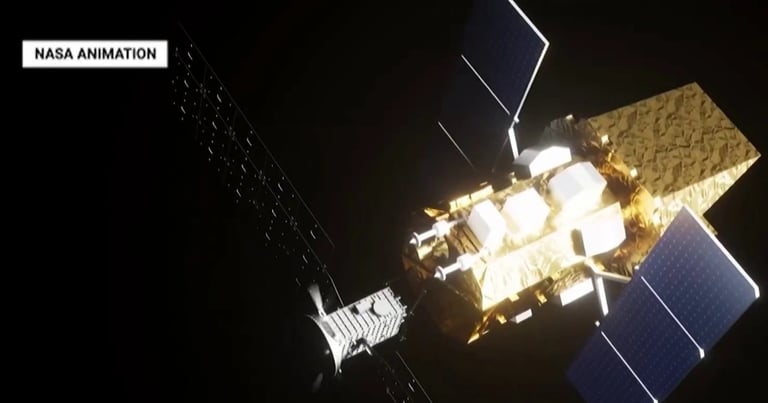

NASA is launching a $30 million rescue mission, Swift Boost, to save the aging Swift Observatory by boosting its orbit with a three-armed autonomous spacecraft named Link, aiming to extend its science life.
The mission, led by Katalyst Space Technologies, involves a rendezvous and reorbit of Swift from a low Earth orbit toward a higher altitude using Link’s robotic arms and ion propulsion.
If successful, the plan could extend Swift’s operational life by at least five years and restore significant scientific capabilities, potentially returning to full operation by September.
NASA officials emphasize the mission buys time with no guarantees, underscoring Swift’s role as NASA’s first responder for rapid follow-up on cosmic events.
Swift will be launched with an air-launched Pegasus XL from Kwajalein Atoll to deploy Link, marking the final Pegasus flight and a rapid development timeline.
Link is designed to rendezvous with Swift within about a month and raise its orbit from roughly 360 kilometers to approximately 600 kilometers over several weeks.
The rescue vehicle Link is a compact, unproven platform equipped with ion engines, robotic arms, and sensors to grapple and reorbit Swift.
The mission represents a historically unprecedented, precautionary attempt to save a target not designed for servicing, balancing high risk with high scientific return.
If Swift is saved, it would mark the first American space robot-assisted repair/relocation of a satellite in orbit, a capability China has demonstrated in the past.
Swift, launched in 2004, has spent more than two decades detecting gamma-ray bursts with rapid repointing capabilities, remaining scientifically valuable despite its age.
Swift’s original orbit sits around 600 kilometers; without boosting, drag could reduce it to about 300 kilometers by October, accelerating reentry.
Beyond Swift, the rescue highlights potential expansion of in-space repair servicing for other assets, signaling a new playbook for space servicing.
Summary based on 3 sources