AnSI Revives Harappan Research with Multidisciplinary Approach, Rakhigarhi Findings Lead the Way
June 22, 2026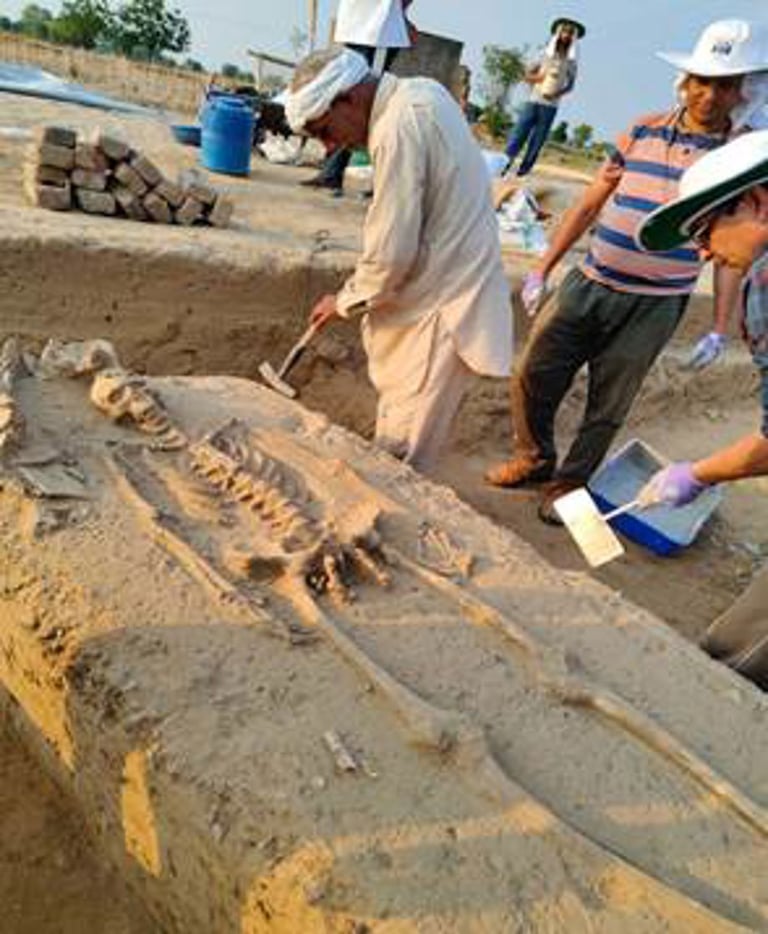

Officials say AnSI’s renewed focus on skeletal biology will be strengthened through multidisciplinary palaeoscience collaborations with institutions such as the Zoological Survey of India, Botanical Survey of India, and Geological Survey of India.
The initiative aims to revive palaeoanthropological research in India by forging interdisciplinary links among archaeology, genetics, environmental science, and human biology, expanding cooperation with BSIP, ZSI, BSI, and GSI.
The transfer will enhance multidisciplinary work by leveraging AnSI’s expertise in human biology and osteology and fostering partnerships with BSIP, UCL, and BHU in palaeogenomics and related fields.
Rakhigarhi is described as the largest Indus-Saraswati settlement, with evidence of continuous habitation from Early Harappan to Mature Harappan times, including urban planning, drainage, craft production, trade networks, and burial grounds.
Covering about 550 hectares, Rakhigarhi is identified as the largest Indus-Saraswati site, showcasing urban features, drainage systems, crafts, trade, and burial practices from Early to Mature Harappan periods.
Rakhigarhi stands as the largest known Indus-Saraswati settlement, with archaeological records spanning Early Harappan to Mature Harappan phases, including planned infrastructure and burial sites.
Detailed analysis of Rakhigarhi material could illuminate origins, health, mobility, and lifestyles of Harappan communities and feed debates on Indus-Saraswati population history.
The initiative is framed as a strategic integration of archaeology, anthropology, genetics, and environmental science to deepen understanding of the origins, health, mobility, and biology of one of the world’s earliest urban civilizations.
Three complete skeletons and several skeletal fragments from eight burials at Mound No. 7 have been transferred to AnSI’s Kolkata repository for study, with additional materials expected soon.
The transfer, tied to excavations in 2025–26, includes three complete skeletons and associated fragments, enabling detailed osteological and palaeoanthropological analysis at AnSI.
Further accompanying skeletal materials are anticipated to be moved to enhance ongoing osteological and palaeoanthropological research.
The transfer is expected to deepen understanding of urbanization’s impact on biology and disease, contributing to Harappan population history while training a new generation of Indian palaeogenomics researchers.
Summary based on 3 sources
Get a daily email with more Science stories
Sources

Press Information Bureau • Jun 22, 2026
Human Skeletal Remains from Rakhigarhi Transferred to Anthropological Survey of India for Advanced Scientific Research
Press Information Bureau • Jun 22, 2026
Human Skeletal Remains from Rakhigarhi Transferred to Anthropological Survey of India for Advanced Scientific Research
Devdiscourse • Jun 22, 2026
Rakhigarhi Skeletons Set for Major Scientific Study | Law-Order