New Study Uncovers Millipedes' Ancient Origins and Evolutionary Secrets
June 14, 2026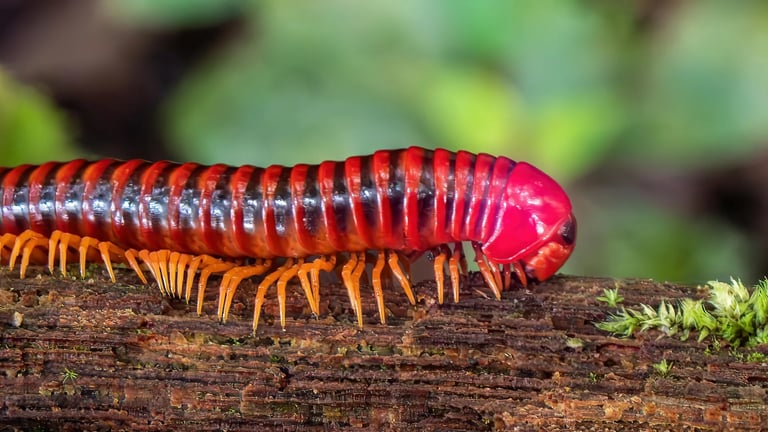

Millipedes emerged around 460 million years ago, predating land-dwelling vertebrates by about 80 million years and laying the groundwork for early terrestrial ecosystems.
As key detritivores, millipedes helped recycle nutrients in the first terrestrial environments by consuming decaying organic material before trees and flowering plants appeared.
New evidence suggests an earlier origin for millipedes than previously thought, potentially older than the oldest known millipede fossils.
The study was led by Paul Marek at Virginia Tech and involved multiple institutions, with funding provided by the National Science Foundation.
Researchers analyzed DNA from 82 millipede species across hundreds of genes, integrating 29 fossils and leveraging extensive computational resources.
The study clarifies two obscure millipede groups: Siphonocryptida is not a separate order but part of an existing lineage, and Siphoniulida aligns with its closest relatives.
Despite describing over 14,000 species, a large portion of millipede diversity remains undiscovered, with active fieldwork continuing to reveal new taxa.
By combining modern DNA data with fossil evidence, researchers completed the full evolutionary history of all living millipede orders, filling gaps in their family tree.
Millipedes developed chemical defenses around 260 million years ago, marking a key adaptive feature.
Summary based on 1 source
Get a daily email with more Science stories
Source
ScienceDaily • Jun 14, 2026
Millipedes beat vertebrates to land by 80 million years