4,500-Year-Old Arctic Site Reveals Advanced Paleo-Inuit Seafaring and Navigation Skills
June 5, 2026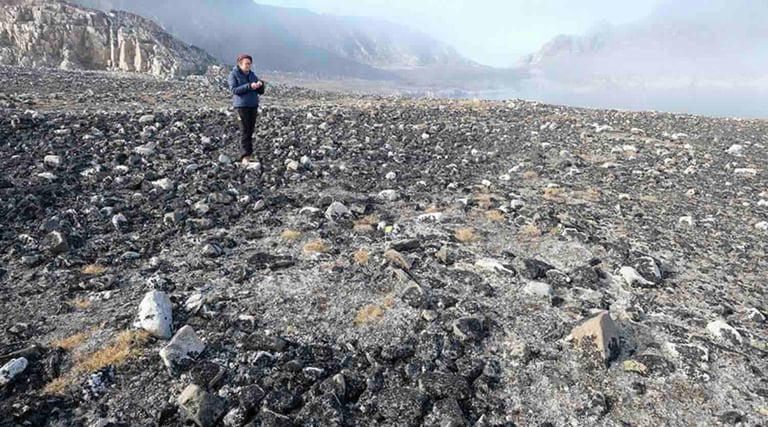

A 4,500-year-old archaeological campsite on Kitsissut in the High Arctic reveals advanced Early Paleo-Inuit watercraft and navigational skills, challenging long-held views about the origins of Arctic seafaring.
The findings fit into a broader Arctic exploration narrative, suggesting possible links to later Norse and Thule Inuit movements and prompting new questions about the depth of ancient Arctic maritime capabilities and environmental influence.
They're interpreted as evidence that Paleo-Inuit communities had maritime subsistence, social organization, and ecological agency, actively shaping their Arctic environment rather than solely adapting to it.
Led by Matthew Walls, Mari Kleist, and Pauline Knudsen and published in Antiquity, the study argues Early Paleo-Inuit used watercraft that integrated terrestrial and marine systems, with open-water Kitsissut voyages possibly using wood, seal skins, and related materials.
The research reframes early Arctic polynya dynamics, suggesting cultural and environmental histories are intertwined and that technology was central to High Arctic lifeways 4,500 years ago.
Kitsissut’s location implies year-round open water navigation (polynya), indicating sophisticated vessel maintenance and navigation to support repeated coastal expeditions in a volatile sea-ice environment.
Summary based on 1 source