WHO Urges Swift Global Action as Ebola Threatens Health Stability in Africa
May 29, 2026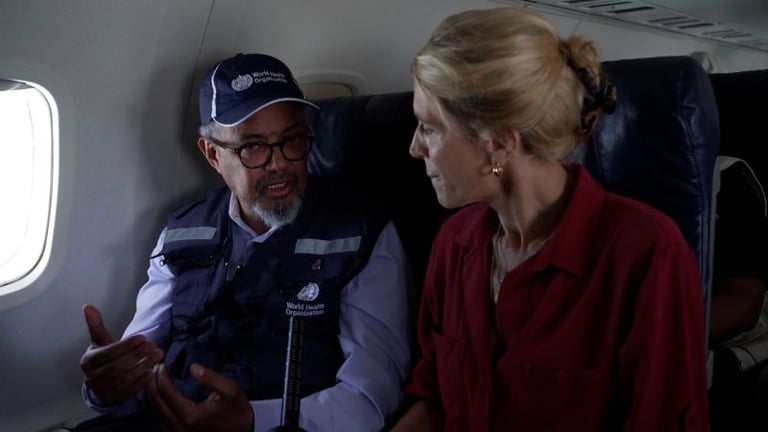

Tedros calls for rapid action, likely involving increased funding, rapid deployment of health workers, and stronger international coordination to contain the outbreak.
The piece casts Ebola as a pressing global health threat that demands swift, coordinated action rather than delayed or isolated responses, with a clear mandate for rapid mobilization.
WHO Director-General Dr. Tedros Adhanom Ghebreyesus has urged the international community to move quickly to prevent further spread, warning that slow responses are unacceptable.
Africa CDC and regional cooperation are highlighted as essential infrastructure, with a view that public health capacity is foundational to economic resilience and growth.
Despite advances in local surveillance, testing, and treatment, the outbreak exposes persistent gaps in the DRC, where depleted capacity and ongoing conflict hinder access to affected areas.
The feature centers on an in-depth CNN interview about the Ebola response in the DRC, with supplementary video thumbnails and segments providing broader context.
A continent-wide investment in public-health capacity is urgently needed across the DRC and neighboring at-risk countries, including developing treatments and vaccines and strengthening public-health communication.
The WHO declared a public-health emergency of international concern in mid-May, triggering a large international humanitarian response and funding, including substantial pledges and research access supports.
The editorial argues there is both a moral and economic case for prioritizing public health, stressing that timely, coordinated action by researchers, health workers, and policymakers can curb outbreaks and limit broader societal damage.
The article outlines the WHO’s role and global health strategies to contain the outbreak, emphasizing surveillance, vaccination, and cross-border collaboration.
Political and financial volatility, including aid cuts and funding shifts (e.g., USAID reductions), have hampered the DRC’s response and underscore the need for stable, long-term investment in health capacity.
The in-flight interview with Tedros, conducted by CNN’s Clarissa Ward aboard a plane over the DRC, underscores the field-based urgency and rapid information sharing.
Summary based on 3 sources
Get a daily email with more Science stories
Sources
CNN • May 30, 2026
CNN speaks with WHO Director-General about Ebola response in DRC | CNN
Nature • May 29, 2026
Ebola can be stopped — but only if world leaders prioritize public health