New Study Reveals T. Rex's Tiny Arms Result from Evolutionary Shift to Dominant Skull Power
May 19, 2026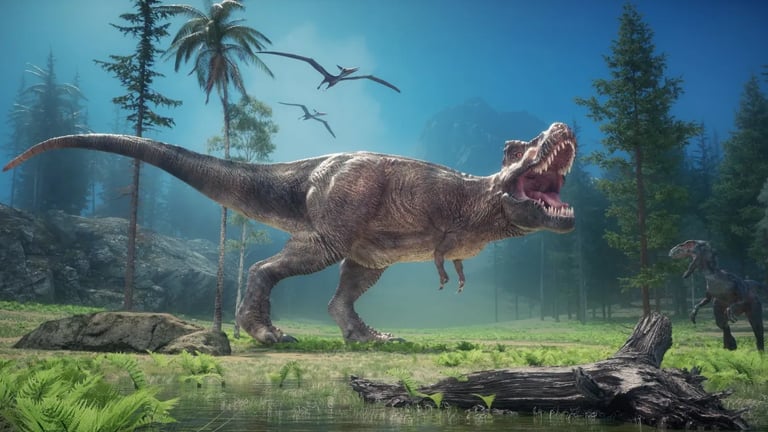

A new study argues that Tyrannosaurus rex and other theropods developed tiny forearms because their skulls and jaws became powerful enough to dominate hunting larger prey, reducing reliance on the arms.
Researchers examined how skull durability, bite force, skull rigidity, and forelimb size relate across theropods, finding a strong link between short arms and a large, powerfully built head.
Analyzing 82 theropod species, the team found that the head often overtook the arms as the primary weapon, correlating with reduced forelimb use.
Experts not involved in the study say the results reveal hidden evolutionary signals and raise mechanical questions about how the reduced arms functioned in hunting.
The research team is part of a broader dinosaur evolution initiative at UCL collaborating with the Natural History Museum, involving postdocs, fellows, and more than 10 PhD students studying dinosaurs and other vertebrates.
The study emphasizes multiple developmental pathways leading to the same outcome of reduced forelimbs, indicating convergent evolution across distinct dinosaur lineages.
Examples such as Majungasaurus from Madagascar and Abelisaurids show reduced arms while maintaining strong jaws, illustrating the trend across multiple lineages.
Not all arm reductions occurred identically: abelisaurids show dramatic shrinkage of hands and lower arms, whereas tyrannosaurids exhibit a more balanced forelimb reduction.
Lead author Charlie Roger Scherer notes skull strength likely preceded arm reduction, with the head becoming the primary weapon and arms becoming less useful over time in an evolutionary use-it-or-lose-it pattern.
The study was published in Proceedings B of the Royal Society (doi: 10.1098/rspb.2026.0528).
Overall, the finding suggests large, powerful heads served as the primary killing tool, rendering arms redundant to some extent across multiple lineages over millions of years.
Majungasaurus is highlighted as an apex predator with a heavily built skull and very small arms in Madagascar around 70 million years ago, showing small arms did not always accompany giant body size.
Summary based on 3 sources
Get a daily email with more Science stories
Sources

New Scientist • May 20, 2026
We may finally know why dinosaurs like T. rex evolved tiny arms
ScienceDaily • May 20, 2026
T. rex’s tiny arms may have evolved for a surprisingly brutal reason
Popular Science • May 19, 2026
Why were T. rex’s arms so tiny?