Innovative Nanobody Treatment Boosts Cystic Fibrosis Protein Function Without Gene Therapy
May 11, 2026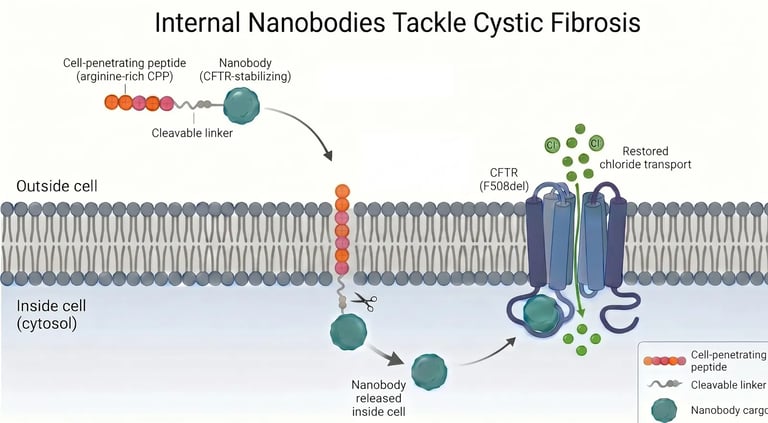


A new approach uses cell-penetrating nanobodies to enter cells and stabilize the misfolded CFTR protein inside cystic fibrosis patients, addressing a key limitation of prior surface-targeting antibodies.
Experiments show increased mature CFTR and enhanced surface expression after nanobody treatment, leading to improved chloride transport and function.
In cystic fibrosis, CFTR mutations prevent proper folding and trafficking to the cell surface; the intracellular nanobody stabilizes CFTR, allowing maturation and restoration of chloride transport.
The nanobody is fused to a short cell-penetrating peptide composed of ten arginine residues, enabling its entry into cells and subsequent binding to CFTR.
The approach does not modify the genome or rely on gene therapy, instead delivering the protein directly into cells, which could reduce associated risks.
When combined with existing small-molecule therapies, the nanobody enhances CFTR activity beyond what either approach achieves alone, with patient-derived airway cells showing nearly normal function.
Beyond CFTR, this strategy suggests a broader potential to target malfunctioning intracellular proteins in various genetic and common diseases using cell-permeable nanobodies.
Ongoing work will focus on optimizing delivery in complex tissues like the lung, where mucus can impede access to cells, to translate this from cellular models toward clinical applications.
Summary based on 1 source
Get a daily email with more Tech stories
Source
Forbes • May 11, 2026
Internal Nanobodies Tackle Cystic Fibrosis