Amazon Tipping Point Looms: Warming and Deforestation Threaten Irreversible Collapse by 2050
May 6, 2026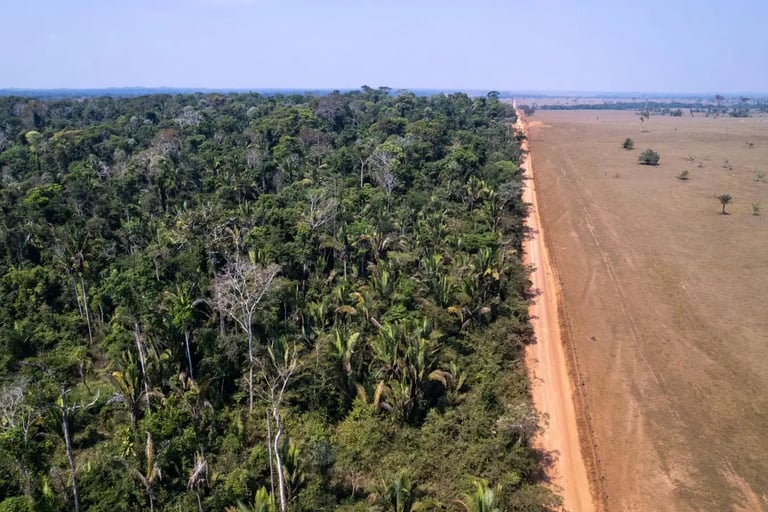

Without deforestation, the Amazon’s tipping-point risk rises only with warming; however, under current trajectories, risk becomes significant as warming approaches 3.7–4.0°C by century’s end, with the western and southwestern Amazon most at risk due to the region’s strong forest-derived rainfall.
Experts caution that new modeling may still underestimate vulnerability, as larger fires and accelerated degradation could push the system toward tipping points, underscoring the urgency of halting deforestation and curbing warming.
Deforestation undermines atmospheric moisture recycling in the rainforest, reducing rainfall and triggering cascading regional drying that hastens dieback.
Brazil lost more than 28,000 square kilometers of primary forest in 2024, nearly a record, while 2025 saw a notable drop; Lula’s 2030 pledge to halt deforestation could help avert tipping points if fully realized.
Deforestation for cattle ranching is increasing the Amazon’s vulnerability to irreversible collapse or dieback, potentially within decades if trends continue.
The study uses the UTrack moisture-tracking model with NorESM2 climate data, performing robustness checks across MAP, MCWD, and deforestation scenarios to quantify risk.
New modeling shows that with rising temperatures and severe deforestation through 2050, total forest loss around 22% could trigger dieback at warming as low as 1.5°C—potentially achievable by the end of this decade.
Two-thirds of recent forest destruction has been driven by wildfires, which are intensifying in hotter, drier conditions and could be amplified by El Niño.
Risk thresholds include MAP below about 1,850 mm/year and MCWD above about 225 mm/year, marking high-risk conditions for transitions.
Cascading transitions, driven by downwind moisture recycling feedbacks, dominate risk under climate change, with deforestation amplifying these effects.
The Amazon is at risk of shifting from a carbon sink to a carbon source due to moisture loss and droughts, with possible dieback releasing carbon and harming biodiversity.
Current trends suggest the forest could already be a carbon source, and widespread dieback could release enough carbon to push global temperatures higher and damage biodiversity.
Summary based on 2 sources
Get a daily email with more Science stories
Sources
Nature • May 6, 2026
Deforestation-induced drying lowers Amazon climate threshold
New Scientist • May 6, 2026
Deforestation could trigger Amazon tipping point in the 2030s