Eccentric Exercises: Build Strength and Fitness with Less Effort and No Pain
May 1, 2026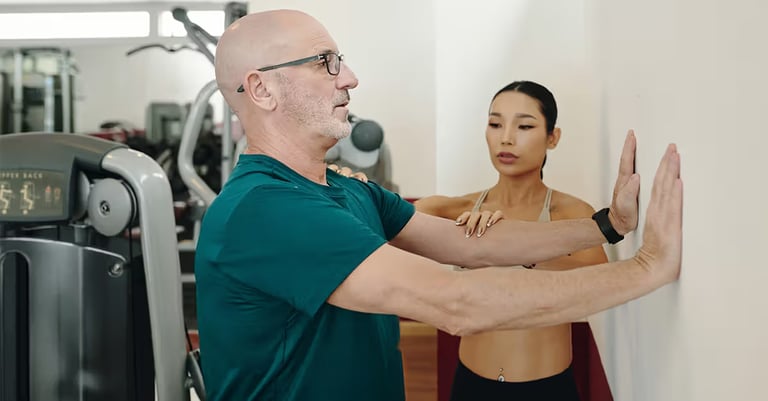

Eccentric exercises lengthen muscles during movements like lowering weights or walking downhill, enabling strength gains and improved fitness with less perceived effort, making them accessible for less active individuals.
Research indicates eccentric contractions can generate more force with less metabolic energy than concentric movements, offering unique benefits for muscle growth, rehabilitation, and brain health.
Beginner-friendly options emphasize the lowering phase, such as chair squats, wall push-ups, reverse sit-ups, and heel drops, with activities like downhill walking or stairs providing practical eccentric-focused work.
A spokesperson from the study, ECU professor Ken Nosaka, argues that achievable, lower-intensity exercise improves adherence and long-term outcomes because routines feel manageable.
Edith Cowan University researchers suggest you can build muscle, strength, and performance without exhausting workouts or soreness, challenging the notion that intense effort is always required.
The article promotes incorporating “eccentric snacks” into daily life and stresses that strength can come without pain, advocating a gradual, individualized approach.
Study author Kazunori Nosaka notes that even small amounts of eccentric work are beneficial and cautions against maximal contractions for beginners, underscoring the importance of warm-up and gradual progression.
This approach is especially suitable for older adults and people with chronic health conditions since it places less strain on the heart and lungs and aligns with everyday activities.
Key differences among contraction types are: concentric shortens the muscle (lifting), eccentric lengthens it (lowering), and isometric involves no length change (holding).
Eccentric training may foster brain and neural adaptations related to motor control and coordination, offering cognitive or neurological benefits beyond strength.
Eccentric-focused exercises can be done at home without special equipment, with simple moves like chair squats, heel drops, and wall push-ups; even five minutes a day can yield meaningful gains.
Eccentric loading allows handling heavier loads during the eccentric phase, potentially boosting strength and muscle growth and enabling greater training volume due to lower fatigue in some cases.
Summary based on 2 sources
Get a daily email with more Science stories
Sources

ScienceDaily • May 1, 2026
You don’t need intense workouts to build muscle, new study reveals
Healthline Media • May 1, 2026
This Type of Exercise Can Help You Build More Muscle With Less Effort