Groundbreaking Genome Study Reveals Rich Genetic Diversity in Indigenous American Populations
April 22, 2026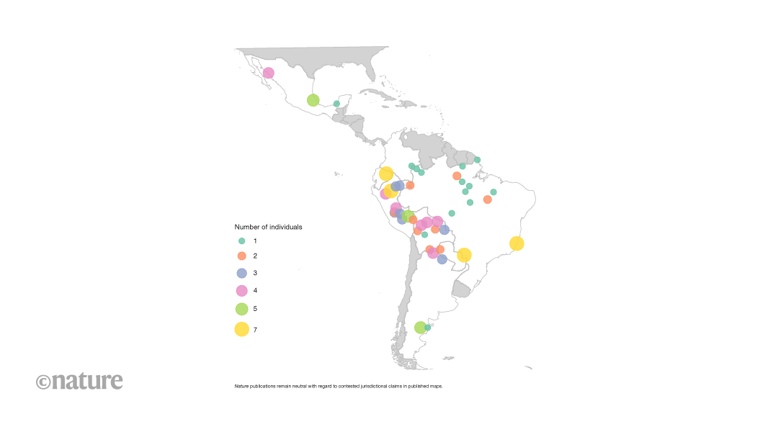

A new comprehensive study generates 128 high-coverage whole genomes from Indigenous individuals across eight countries to illuminate demographic history, diversity, ancestry, archaic introgression, and adaptation in Indigenous American populations.
The analysis stresses rigorous methodology and ethical engagement with Indigenous communities, while highlighting the regional complexity of ancestry and diversity across the American continents.
The large and diverse genome set reveals extensive genetic diversity and a complex history of dispersals, continuity, and adaptation across the Americas.
Genetic analyses show geographic directionality and regional continuity, with long-standing connections to geography and limited mobility in some regions, supporting partial rather than complete replacement during dispersals.
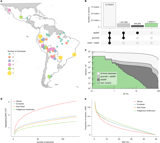
Post-contact bottlenecks were widespread with signs of regional recovery in some areas; precolonial expansions occurred in eastern and western South America, while Ne histories show 40–90% declines over the last ten millennia with regional timing differences.
Identity-by-descent and admixture suggest limited postcolonial gene flow within most populations, but notable connectivity between Mesoamerica and South America, with reduced migration in Aridoamerica, northern Amazon, Chaco, and eastern South America.
Access to the Nature article and materials is provided under CC BY 4.0 and CC BY-NC-ND licenses for figures and expert opinions.
Certain groups, including Karitiana, Suruí, Amahuaca, and Yaminahua, show elevated runs of homozygosity due to isolation and bottlenecks, while Arapium shows admixture with non-Indigenous ancestries.
Divergence from Asian ancestors occurred roughly between 70,000 and 15,000 years ago; three main dispersals into South America are inferred, with an early Southern Native American lineage and later dispersals into Central America and the Caribbean, plus a distinct third dispersal into South America in Ceramic-period times.
There is clear North–South American structure with four South American clusters (Southern Cone, Eastern, Western, Chaco) and North American groups split into Aridoamerica and Mesoamerica; geography drives structure more than ethnolinguistic grouping.
Overall, the findings illuminate population movements, continuity, and adaptation across the Americas, advancing understanding of Indigenous genomic history.
The study is led by Castro e Silva, M. A. et al., published in Nature and accessible via the DOI 10.1038/s41586-026-10406-w.
Summary based on 2 sources
Get a daily email with more Science stories
Sources
Nature • Apr 22, 2026
The evolutionary history and unique genetic diversity of Indigenous Americans
Nature • Apr 22, 2026
Genomic roots of Indigenous Americans uncovered