Curiosity Rover Uncovers Rich Organic Molecules in Mars' Gale Crater, Fueling Life Potential Debate
April 21, 2026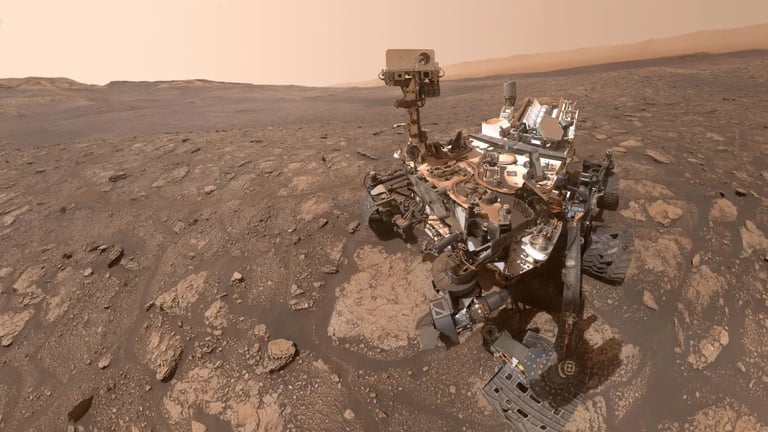


NASA’s Curiosity rover conducted the first in situ thermochemolysis using tetramethylammonium hydroxide (TMAH) on Mars, analyzing clay-rich sandstone in Gale crater’s Mary Anning target to release diverse organic molecules.
The study found more than 20 organic molecules, including benzothiophene and nitrogen-bearing compounds related to indole-like structures, suggesting complex martian organics potentially linked to meteorite delivery and indigenous chemistry.
Seven molecules were unambiguously detected in the Mary Anning TMAH data, with a larger set of peaks observed across two chromatographic runs, indicating a rich organic inventory in the subsurface clay-rich rock.
Researchers propose these complex organics may be preserved in shallow subsurface layers, though their origin—past life, meteorite input, or geological processes—remains uncertain.
The findings come amid budgeting and timing constraints for sample-return missions, underscoring the importance of in-situ analysis for advancing Mars science, with planned future work on ESA’s Rosalind Franklin and NASA’s Dragonfly missions.
The results are published in Nature Communications and provide context for upcoming, more detailed analyses by future missions and instrument developments.
While the detected organics strengthen the case for ancient Martian chemistry capable of supporting life, they do not prove past life, and definitive conclusions will require additional evidence or sample return.
Scientists estimate Mars may have preserved organic matter for about 3.5 billion years, but the connection to life remains unproven and contingent on further data.
Overall, the study emphasizes that detecting organics is not synonymous with life, and multiple steps and corroborating evidence are needed before drawing life's implications.
The study notes instrumental caveats, including TMAH release from foil punctures and sampling cadence affecting internal standards and potential co-elutions, which researchers acknowledge could influence peak identifications.
Identified molecules include benzothiophene and a nitrogen-bearing compound resembling DNA precursors, highlighting possible astrobiological relevance of martian organics.
The researchers stress the importance of continuing rover-based interpretation and developing new instruments to refine Mars’ history and habitability assessments.
Summary based on 4 sources
Get a daily email with more Tech stories
Sources
Gizmodo • Apr 21, 2026
NASA’s Curiosity Rover Discovers ‘Origin-of-Life’ Molecules Never Before Seen on Mars
The Guardian • Apr 21, 2026
‘Is it life? We can’t tell’: Nasa’s Curiosity rover finds organic molecules on Mars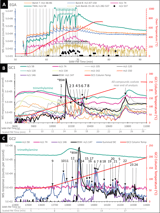
Nature • Apr 21, 2026
Diverse organic molecules on Mars revealed by the first SAM TMAH experiment
Popular Science • Apr 21, 2026
Curiosity rover finds signs of ancient life on Mars