Conservation Genomics: A Key Tool for Ecosystem Restoration Amid Climate Challenges
April 10, 2026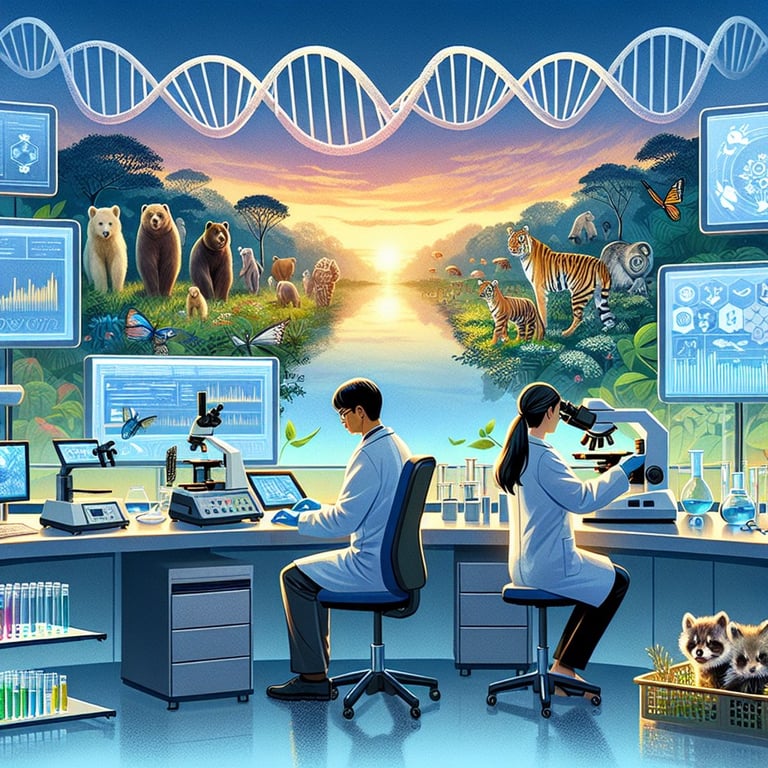


Conservation genomics offers promising tools for ecosystem restoration but cannot replace urgent climate action or emissions reductions; it must be part of a comprehensive conservation strategy.
In California, researchers are using genomics to assess and strengthen restoration efforts as temperatures rise and genetic diversity declines.
Experts acknowledge hurdles, noting that genomics cannot address all environmental challenges and requires integration into broader conservation planning.
Current restoration efforts remain experimental and not yet scalable; successful field deployment depends on further development and collaboration with institutions like Scripps Institution of Oceanography.
Key context includes the 2019 UN-affiliated warning about potential extinction of about 1 million species due to human activity, and 2020 findings that redwood forests store substantial carbon per acre.
Next steps involve continuing collaborations with ecologists to translate conservation genomics insights into future restoration projects.
Notable examples and expert insights include hybrid eelgrass work by Todd Michael, redwood genome sequencing by David Neale, and Karen Holl’s caution that engineering resilient species alone cannot sustain ecosystems.
The work aims to translate genetic insights into practical restoration and conservation practices to boost ecosystem resilience over time.
Conservation genomics helps ecosystems adapt to climate change by identifying heat and drought-tolerance traits and selectively cultivating or breeding those variants for restoration of coral reefs, seagrass meadows, and redwood forests.
In Southern California, eelgrass hybrids show improved performance under low light, offering a potential path for more effective restoration, though field deployment remains experimental and underfunded.
Researchers use DNA sequencing to find resilient individuals in corals, eelgrass, and redwoods, including hybrids that outperform parents in challenging conditions.
The effort involves collaboration across agencies, reflecting a multidisciplinary and policy-relevant approach to climate adaptation through genomics.
Summary based on 6 sources
Get a daily email with more US News stories
Sources
AP News • Apr 10, 2026
Scientist use DNA in efforts to help species adapt to climate change | AP News
National Today • Apr 10, 2026
Scientists Use DNA to Adapt Ecosystems to Climate Change - San Diego Today
ABC News • Apr 10, 2026
Climate change is outpacing evolution. Scientists are using DNA to catch up
U.S. News & World Report • Apr 10, 2026
Climate Change Is Outpacing Evolution. Scientists Are Using DNA to Catch Up