Ancient Dog Genomes Reveal Early Eurasian Domestication and Hunter-Gatherer Integration
March 25, 2026

A pair of Nature papers push back the genetic record of domestic dogs to roughly 14,000–16,000 years ago, revealing the oldest dog genomes from Europe and the Middle East and showing a widespread early dog population across Western Eurasia kept by diverse hunter-gatherer groups.
The European dogs form a gradual east-to-west genetic cline, indicating continuity from Upper Palaeolithic/Mesolithic dogs to Neolithic and later European dogs, with admixture shaped by the Neolithic transition.
Findings imply that dogs predated farming and joined Europe’s shift to agriculture, with local hunter-gatherer dogs integrating into farming communities as agriculture spread.
The News & Views piece places these findings within the broader context of dog origins, synthesizing implications for human–dog history and related studies.
The study, published in Nature, involves collaboration among researchers from the Francis Crick Institute and the University of East Anglia.
Dogs appear to have moved with human populations but sometimes without parallel human gene flow at the same sites, suggesting dog exchange networks that don’t always align with broader human genetic exchange.
Scholars caution that, although deeply integrated with humans, the exact timing of domestication remains uncertain and likely occurred over generations in multiple regions.
Isotopic analysis shows Turkish-site dogs consumed diets rich in fish, aligning with human diets and indicating purposeful feeding by humans.
Stable isotope data also show similar trophic positions for humans and dogs at Gough’s Cave, implying intimate provisioning relationships and aquatic inputs for Pinargibaşi dogs.
The article lists references and related papers on ancient dogs and canine genomic history, with direct links for further reading.
The research clarifies how ancient dog genomes illuminate relationships between early dogs and wild canids, refining our understanding of domestication processes.
The work highlights the concept of the “Swiss Army Dog,” capable of adapting to diverse human roles—from guarding and hunting to ritual significance—across eras.
Summary based on 8 sources
Get a daily email with more Science stories
Sources

The Guardian • Mar 25, 2026
Bond between dogs and humans dates back more than 15,000 years, study finds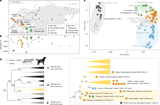
Nature • Mar 25, 2026
Dogs were widely distributed across western Eurasia during the Palaeolithic
Nature • Mar 25, 2026
Genomic history of early dogs in Europe
Nature • Mar 25, 2026
Dogs have deep genetic roots in ice-age Europe