Unearthing Stolzenberg: Medieval Market Town Revealed by Geophysical Survey and Excavation
March 16, 2026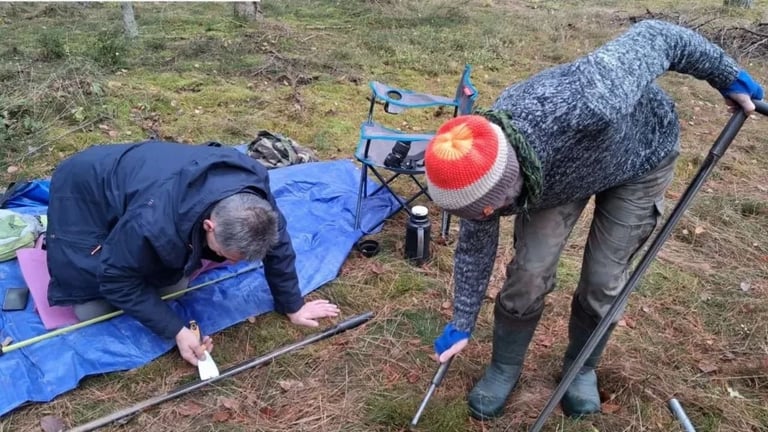

A geophysical survey and excavations reveal a rectangular market-square layout encircled by a moat and earthen ramparts, consistent with medieval towns founded under German law, with traces of buildings along a street leading to a city gate.
Initial searches near Slawoborze yielded no confirmatory features, but subsequent geophysical work uncovered massive ramparts, an 18-foot-deep moat, and a rectangular market-square layout typical of German-law towns.
Recent drilling and geophysical surveys show layers over two metres deep, indicating a central market and a street to a city gate within a six-hectare area bordered by rampart and moat.
Interpretations of Stolzenberg’s abandonment point to multiple factors, including shifts in trade routes, proximity to rivers and flood risk, and competition from nearby towns, with decline likely in the 14th–15th centuries.
Experts caution that pinning an exact date and cause is challenging, but potential drivers include trade-route changes, nearby-town competition, and relocation due to flooding or development pressures.
Researchers aim to determine the town’s founding date and the reasons for desertion, considering natural disasters, trade decline, or wars as possible influences.
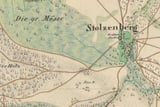
Initial attempts to locate Stolzenberg at its modern locality failed, but a targeted forest search confirmed the site through magnetic anomalies and geophysical data.
Future work includes locating the town hall and church, mapping the city layout, and conducting bioarchaeological analyses to infer health and diet of former inhabitants, continuing the investigation of this described as a 'true time capsule'.
Researchers seek to confirm additional features like the town hall and church, study undeveloped urban plots, and perform bioarchaeological analyses to understand residents’ health and diets, marking the start of a long, detailed study.
More than 400 artefacts were found, including Bronze Age items, medieval coins, belt fittings, and weapons linked to the 1761 Seven Years’ War, indicating long-term occupation and later conflict activity.
The Margraves of Brandenburg (Neumark) are considered the most likely founders of Stolzenberg.
The layout suggests Stolzenberg functioned as an economic center anchored by a regular marketplace, with origins traced to the 14th or 15th centuries on the Pomerania–Neumark border.
Summary based on 7 sources
Get a daily email with more Science stories
Sources

Fox News • Mar 15, 2026
Archaeologists uncover lost medieval city that vanished without a trace: 'True time capsule'
The Jerusalem Post • Mar 17, 2026
Archaeologists uncover traces of a lost medieval city deep in Polish forest