UCSD Researchers Pinpoint Enzyme N4BP2 as Key Driver of Cancer's Aggressive Evolution
February 16, 2026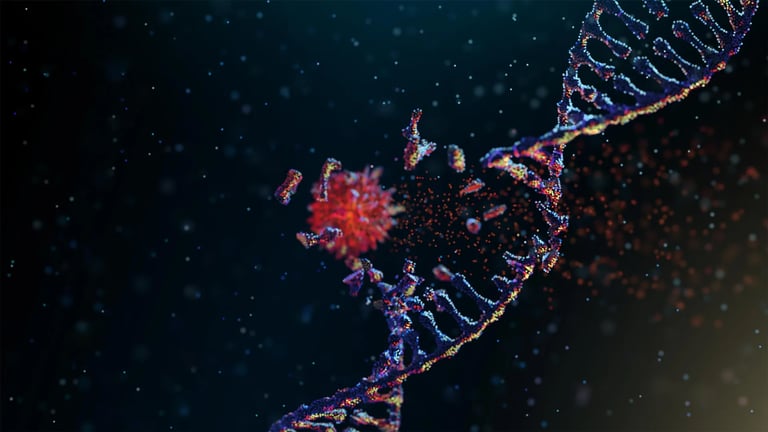

Scientists at UC San Diego have identified the enzyme N4BP2 as the trigger for chromothripsis, a catastrophic chromosome shattering and reassembly process that drives rapid cancer evolution and treatment resistance.
The findings, published in Science, come from imaging-based nuclease screening and comprehensive genome analyses conducted by senior author Don Cleveland and a large team from UC San Diego and collaborating institutions, with support from multiple NIH grants.
The study suggests new therapeutic strategies that would target N4BP2 or its activated pathways to slow cancer evolution and limit genomic chaos in aggressive cancers.
Experiments removing N4BP2 from brain cancer cells significantly reduced chromosome fragmentation, while increasing N4BP2 caused extensive breakage even in healthy cells, establishing a direct causal role for N4BP2 in chromothripsis.
The research links ecDNA—circular DNA fragments that often carry cancer-promoting genes—to the aggressive phenotype and therapy resistance, proposing ecDNA as a downstream consequence of chromothripsis rather than a separate phenomenon.
Analysis of over 10,000 cancer genomes shows tumors with higher N4BP2 activity have more chromothripsis, larger-scale rearrangements, and increased extrachromosomal DNA, all associated with aggressive growth and drug resistance.
Chromothripsis arises when chromosomes in micronuclei rupture, allowing nucleases to cut DNA; N4BP2 uniquely localizes to micronuclei and fragments DNA, serving as the initiator of the event.
Summary based on 1 source
Get a daily email with more Science stories
Source

ScienceDaily • Feb 16, 2026
Scientists discover the enzyme that lets cancer rapidly rewire its DNA