OpenAI’s Invisible Text Watermark Comes to the EU—but It’s No Proof of Authorship
October 28, 2026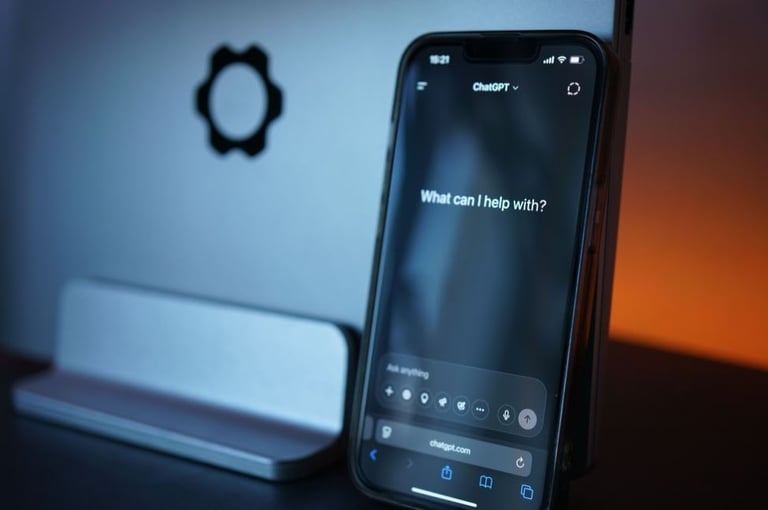

textGrain’s EU rollout is a pragmatic response to the EU AI Act’s transparency requirements, but it highlights that watermark-based provenance is probabilistic and can be undermined by edits, making it far from definitive proof of authorship.
Because of these weaknesses, access to the detection tool is restricted to approved researchers and expert organizations, not available to educators, students, or the general public at this time.
textGrain subtly biases a model’s next-word predictions using a secret cryptographic key, embedding a detectable statistical pattern into the text without affecting readability or performance, and the watermark survives copy-paste and transportation of the content.
The article places textGrain in a broader industry context where multiple companies pursue provenance standards (Google, Meta, Microsoft, Adobe, Anthropic), but open-source models remain a major blind spot since they can produce unwatermarked text.
OpenAI acknowledges significant limitations: watermark detection is fragile, with detection rates falling sharply if words are replaced or edited (e.g., 92% to 66% with 10% synonym replacement; 95% to 17% with 25% replacement on longer passages); short passages, math results, and translations are harder to detect.
A watermark does not prove human authorship; its absence does not prove non-authorship or absence of AI involvement, and presence only confirms that an OpenAI system generated or processed part of the text.
The watermark does not identify individual users; it indicates the text was generated or processed by an OpenAI system, preserving some privacy while providing provenance signals.
Overall, the piece frames textGrain as a meaningful but limited step toward AI text provenance, emphasizing regulatory alignment, practical fragility, and the ongoing evolution of provenance tools across the industry.
OpenAI will roll out an invisible watermark called textGrain for text generated by ChatGPT and Codex, initially limited to users in the European Union to comply with EU AI transparency rules.
Summary based on 1 source