2026 AI Assistant Guide: Top 11 Tools Compared for Features, Privacy, and Performance
August 26, 2026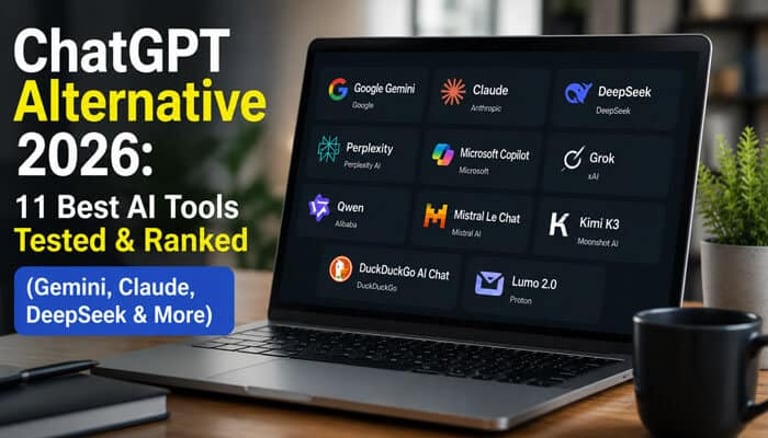

The main takeaway is that by 2026 AI assistants have diversified beyond ChatGPT, with specialized tools across coding, research, privacy, multimodal tasks, and enterprise needs, and a detailed guide compares 11 top options by features, pricing, performance, privacy, context window, and value.
Gemini tops the general-use category with a strong free tier and multimodal capabilities, while Claude shines for coding and reasoning, and Kimi K3 offers the best value pricing.
DeepSeek V4 Pro is highlighted as the best free option for power users with a 1 million token context window and a large output capacity.
Enterprise and privacy notes emphasize that the EU AI Act enforcement began on August 2, 2026, making GDPR compliance and indemnities critical when outsourcing AI and managing data governance.
The market landscape by mid-2026 shows OpenAI’s share declining as new models and privacy-focused options emerge, with notable releases like Claude Sonnet 5, Lumo 2.0 with zero-access encryption, GPT-5.6 series, and DeepSeek expanding context windows, reshaping options.
The rankings rely on a robust testing methodology including benchmarks (MMLU, HumanEval, SWE-Bench Pro), human preference scoring, and core metrics such as accuracy and user experience.
Pricing and tiers are explained: high-end models like GPT-5.6 Sol; mid-range Terra; cheaper Luna for high volume, with self-hosting options available via Qwen3.8 Max and GLM-5.2 for governance needs.
The introductory context notes that AI assistants have diversified into specialized tools, and the guide evaluates 11 tools by features, pricing, performance, privacy, context window, and workflow value to help users choose.
For specific use cases: writing/editing benefits from Claude or GPT-5.6 Sol; research is best served by Perplexity; coding benefits from Claude Opus 5 or Kimi K3; multimodal tasks favor Gemini or GPT-5.6 Sol; privacy-focused options include offline or private options like Confer, Proton Lumo, and Loci.
In practice, there is no one-size-fits-all tool in 2026; most users should test a small set—e.g., Gemini for general use, Claude for coding, Perplexity for research—while weighing privacy, budget, and enterprise needs.
The practical takeaway is to tailor tool choice to workflow, leveraging a few strategic options rather than chasing a single best solution across all tasks.
Summary based on 1 source
Get a daily email with more AI stories
Source

Tycoonstory Media | Online Network for Entrepreneurs & Startups. • Aug 26, 2026
ChatGPT Alternative: 11 Best AI Tools to Try in 2026