KAIST Study Reveals AI Agents' Massive Energy Demand, Calls for Sustainable AI Workflows
July 5, 2026

KAIST researchers conduct the world’s first quantitative, real‑world analysis of the energy cost and computational resources required by AI agents—autonomous, tool‑using systems operating as real service workloads on data centers.
They define AI agents as a new, continuous workload for data center servers and GPUs, analyzing compute resources and power consumption in live service environments for the first time.
The study reveals AI agents call language models far more often than traditional step‑by‑step reasoning, driving longer response times and substantial GPU idle time when external tools are used.
GPU utilization is uneven, with idle times reaching up to roughly half of total execution when external tools perform significant computation.
A representative 70‑B parameter agent can consume up to 348.41 watt‑hours per query, meaning energy costs per interaction are substantially higher than for simpler AI tasks.
Projections show that 13.7 billion AI agent requests per day could push data‑center power demand to about 198.9 gigawatts, approaching half of the United States’ average annual consumption.
This potential scale underscores a sustainability challenge and the need for more energy‑efficient AI workflows.
The findings shift the AI competitive lens from model prowess to efficiency, advocating co‑design of AI models, semiconductors, data centers, and power infrastructure to reduce operating costs and enable sustainable AI services.
In other words, competitiveness now hinges on energy and infrastructure efficiency, not just model performance.
The study is titled The Cost of Dynamic Reasoning: Demystifying AI Agents and Test-Time Scaling from an AI Infrastructure Perspective, with an open‑source repository linked in the article.
A future‑oriented scenario is presented to illustrate the scale of impact if AI agents become pervasive, reinforcing sustainability concerns and the need for systemic changes.
Summary based on 4 sources
Get a daily email with more AI stories
Sources

The Herald Business • Jul 5, 2026
AI agents consume 136.5 times more power than ChatGPT, KAIST study finds - The Herald Business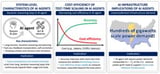
EurekAlert! • Jul 4, 2026
KAIST identifies the “hidden energy cost” of AI agents for the first time
Mirage News • Jul 5, 2026
KAIST Unveils AI Agents' Hidden Energy Cost
DigitalToday • Jul 5, 2026
AI agents can use up to 136.5 times more energy than conventional AI, KAIST study finds