Microsoft's Bold AI Restructuring: New Divisions, Soaring Revenues, and 180 Million Copilot Users by 2026
June 10, 2026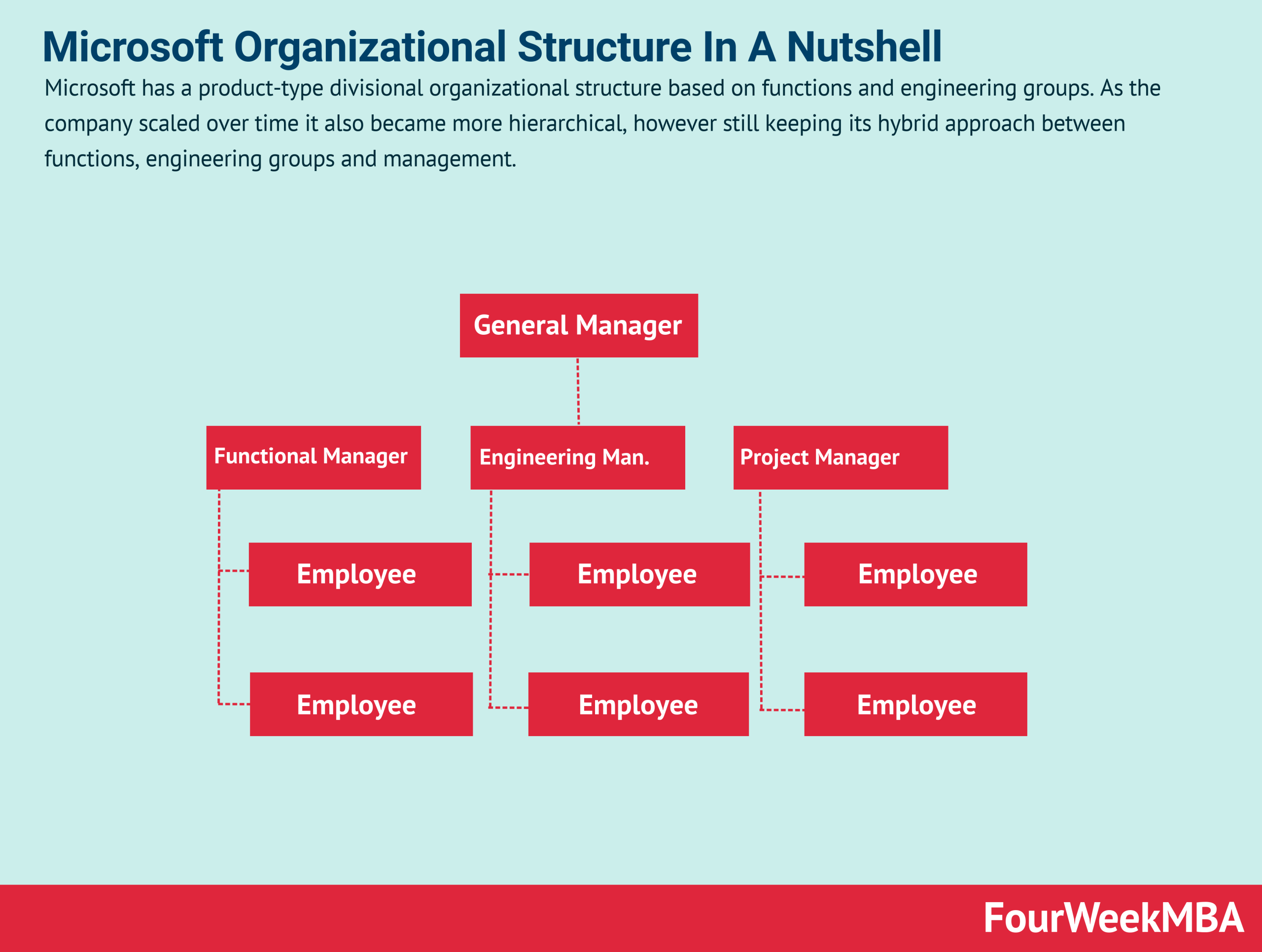

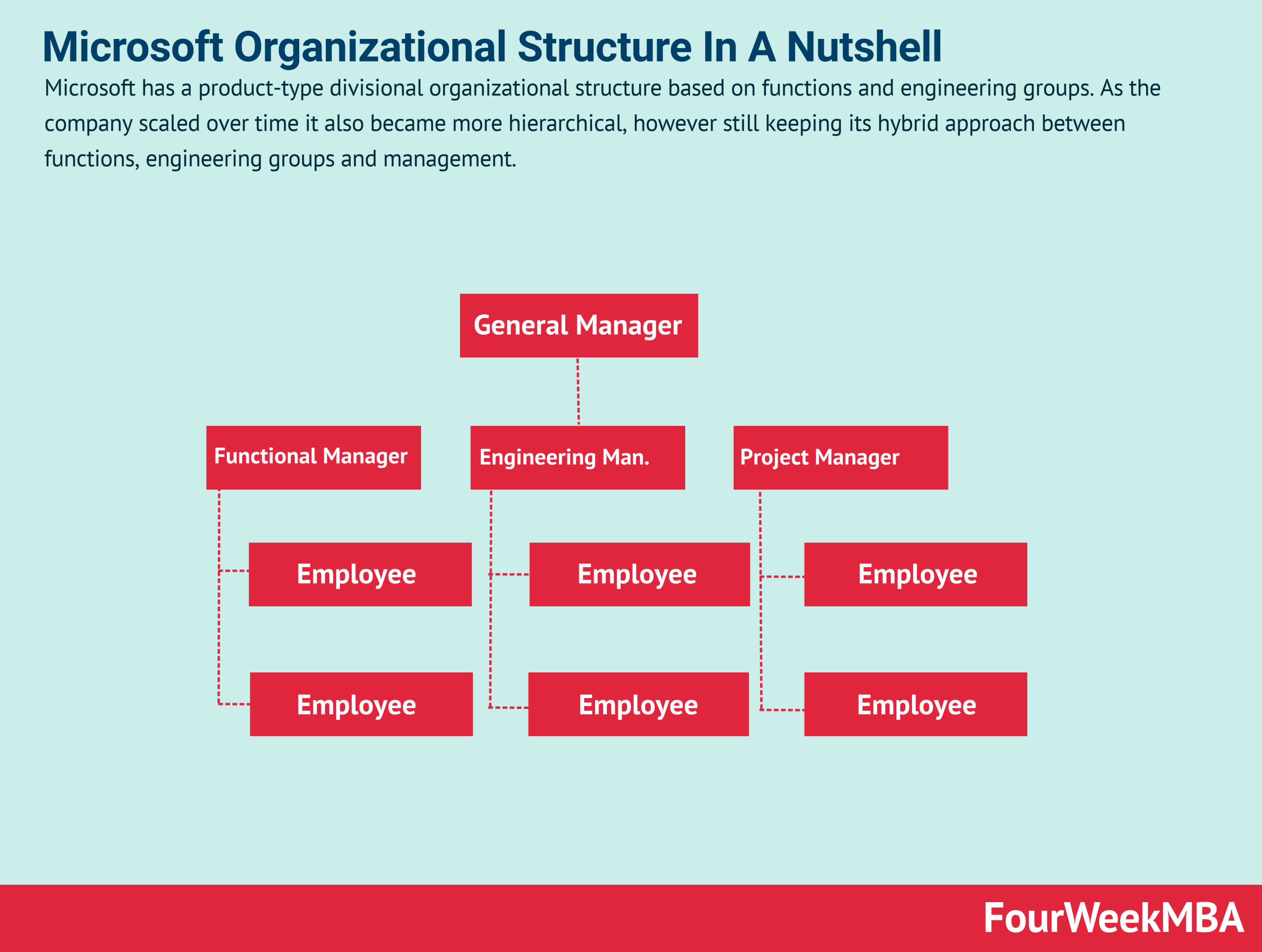
Microsoft restructured in 2025–2026 from product silos into seven AI-integrated divisions, embedding Copilot and AI across all units to support an AI-first mandate.
The divisional model offers streamlined innovation, reduced internal conflict, and greater flexibility, but may risk product incompatibility and less focus on international markets.
For 2026, the company reports 285,000 employees, $295 billion in annual revenue, a 65% cloud revenue share, 180 million Copilot users, presence in 190+ countries, and $32 billion in R&D investment (about 11% of revenue).
Two core engineering divisions drive product development: Cloud and Artificial Intelligence Platforms, and Experiences and Devices.
Geographic structure divides operations into United States and International, with centralized decision-making across a wide span of control.
Compared with peers, Microsoft blends product specialization with cross-functional coordination, adopting a matrix-like approach rather than pure centralized or hard divisional structure.
Seven functional divisions exist: Business Development and Evangelism; Finance; Human Resources; Legal and Corporate Affairs; Engineering; Dynamics; Advanced Strategy and Research.
Key takeaways include Nadella’s move to two engineering-led product clusters and seven functional divisions, plus geographic split and centralized decision-making, with potential drawbacks like incompatibilities and regional market considerations.
Microsoft’s structure emphasizes AI integration across divisions, guiding enterprise customers toward intelligence-augmented workflows over traditional functional boundaries.
AI-driven restructuring accelerated AI integration, breaking down silos between research and product development; Copilot now has widespread use with 180 million active users by 2026.
The seven product-type divisions are Productivity & Business Processes, Intelligent Cloud, More Personal Computing, Gaming, LinkedIn, Devices, and Corporate Functions, each with dedicated R&D and sales teams.
Total headcount reached 285,000, with 114,000 in AI/cloud roles, and cloud revenue rising to 65% of total revenue from 50% in 2023.
Summary based on 1 source
Get a daily email with more AI stories
Source
FourWeekMBA • Jun 9, 2026
Microsoft Organization Structure: 7 Key Divisions 2026 - FourWeekMBA