AI-Powered Industrial Revolution: China's Lead and SpaceX's Orbital Ambitions Amid Global Challenges
April 19, 2026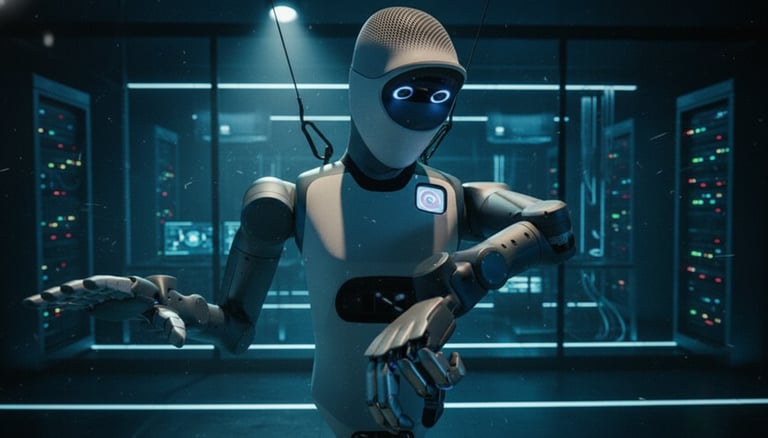

The analysis depicts an impending industrial transformation powered by AI, battery storage, solar power, semiconductors, sensors, and electric motors, with China maintaining a substantial lead through its manufacturing prowess and large-scale deployment.
China already accounted for roughly half of the world’s installed industrial robots by 2024, underscoring a structural competitive edge in electricity generation and raw material processing that far exceeds the United States.
Foundational technologies are advancing exponentially, as large language models have improved about 21-fold every two years since 2010, while costs for lithium-ion batteries, solar panels, and lidar have fallen sharply, accelerating adoption.
SpaceX’s acquisition of xAI on February 2, 2026 signals a strategic move to build AI infrastructure in orbit, aiming to deploy capabilities by 2028 and highlighting multi-domain competition for AI leadership.
Elon Musk warns of obstacles in mass robotic production, noting that Tesla’s Optimus humanoid robot is unlikely to enter serial production before late 2026.
The piece highlights social and cultural risks tied to this revolution, including the challenges of scaling advanced robotics and the real-world intelligence barriers that impede mass production of robots.
Ultimately, while AI-driven technologies could reshape the global economic order, they also raise societal challenges that demand international cooperation and prudent governance to maximize benefits and minimize disruption.
Summary based on 1 source
Get a daily email with more AI stories
Source

inkorr.com logo • Apr 19, 2026
The New Industrial Revolution: China's Lead in AI and Robotics