Northwestern Researchers Develop Printable Neurons: A Leap Towards Brain-Machine Interfaces and Sustainable AI
April 18, 2026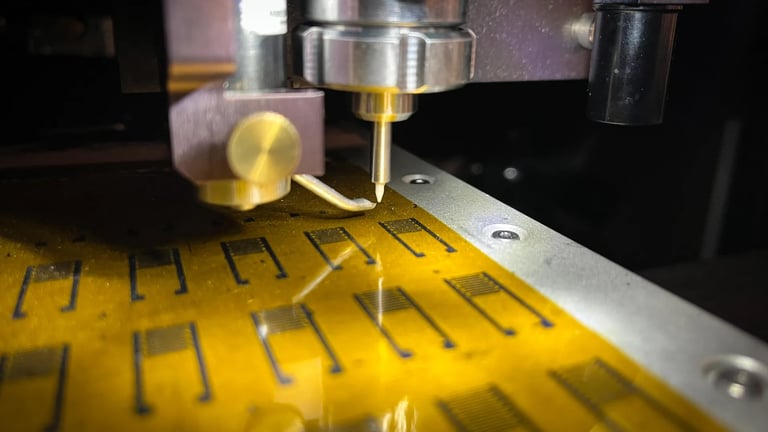


Northwestern University researchers have created printable artificial neurons by layering MoS2 nanosheets and graphene on flexible polymers, enabling neuron-like electrical signals.
The method relies on partial polymer decomposition in the ink to form conductive filaments, directing focused current paths that produce neuron-like spike firing.
In tests, these artificial neurons exhibited spike timing and duration that mirror key biological properties and could reliably activate real neurons and neural circuits.
The team demonstrated interactions between the artificial neurons and living brain tissue, observing activity in mouse cerebellar slices.
The study was published in Nature Nanotechnology on April 15 and received funding from the National Science Foundation.
Leading researchers include Mark C. Hersam and Vinod K. Sangwan of Northwestern University, with collaboration from Indira M. Raman.
Potential applications span brain-machine interfaces and neuroprosthetics for hearing, vision, or movement, as well as brain-inspired computing with lower energy use.
This work underscores how the brain’s three-dimensional, heterogeneous, dynamic networks inspire new materials and fabrication methods for more efficient computing.
Printable, additive manufacturing promises low-cost, sustainable production with reduced waste, addressing energy and water concerns tied to AI data centers.
Summary based on 1 source
Get a daily email with more AI stories
Source
ScienceDaily • Apr 18, 2026
Artificial neurons successfully communicate with living brain cells